

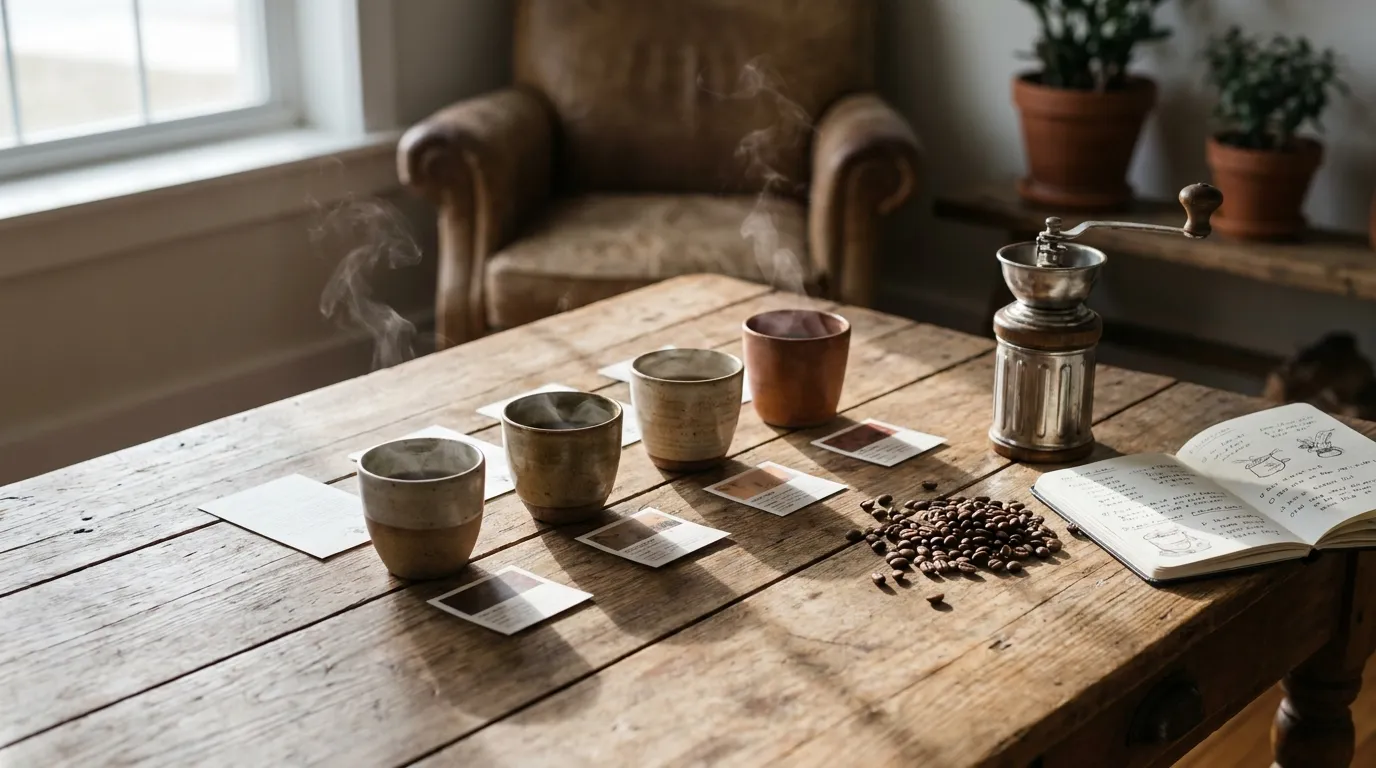
Coffee tasting can feel odd at first, and sometimes even awkward. People talk about berries, chocolate, or flowers, while you take a sip and think, “It just tastes like coffee.” That response is very common. A lot of home brewers land in the same place, even the eager ones. They buy better beans and nicer gear, but the cup still feels dull. Instead of clear answers, they’re left with a bunch of questions that don’t quite match up.
Brewing skill and tasting skill usually grow side by side. Being able to taste what’s in the cup goes past hot and bitter and starts to explain why one coffee feels bright while another feels heavy. Differences in origin or roast become easier to spot, and that feedback goes right back into how you brew. Once flavors start to click, small changes like grind size or ratio stop feeling like guesses and begin to make a real difference.
This guide walks through coffee tasting in a clear, friendly way, without loading it down with jargon. It explains what tasting actually involves, how cupping works, ways to train your palate at home, common mistakes, and a look at some newer directions in coffee. The focus stays on everyday brewing, the kind that happens on busy mornings, not in judging rooms.
For hands-on coffee learning, platforms like CoffeeMindset are especially useful. Their content sticks to clear, education-first explanations that work in real home kitchens, which makes them a helpful reference for curious home brewers.
What Coffee Tasting Really Means
Coffee tasting isn’t about having a rare palate. It’s about noticing what’s already there. Tasting with intention means giving your coffee a short pause, even on a busy morning. You begin with the aroma, then move to flavor, pay attention to mouthfeel, and finish with the aftertaste. This simple order helps each coffee stand out instead of blending into one familiar flavor.
At the heart of coffee tasting are a few everyday questions. Does the smell feel pleasant or a bit off? Do you notice sweetness, sourness, bitterness, or something more balanced? As you sip, pay attention to how the coffee feels in your mouth. After you swallow, does the taste disappear fast or stay with you? The length of that aftertaste often surprises people, and once you notice it, it’s hard not to pick up on it in later cups.
Professionals use shared standards to limit personal bias. One common method is coffee cupping, which removes brewing choices on purpose. With a simple, consistent setup, the focus stays on the beans, not the equipment, which keeps comparisons fair.
James Hoffmann, World Barista Champion and coffee author, explains this idea in a very clear way.
The idea behind cupping is to avoid the flavour being affected by the brewing process… the process is intended to treat all coffees being tasted as equals.
Modern coffee tasting now follows updated guidelines from the Specialty Coffee Association. In 2024, they introduced the Coffee Value Assessment, or CVA. It separates sensory notes from personal taste, changing how quality is talked about and judged.
Here are a few facts that shape today’s coffee tasting standards.
| Tasting Standard | Key Detail | Current Guidance |
|---|---|---|
| Cupping form update | CVA replaces old form | 2024 |
| Steep time | Ground coffee in hot water | 3 to 5 minutes |
| Best tasting window | After grinding | Within 15 minutes |
Cupping Coffee at Home Step by Step
Cupping coffee at home doesn’t take much equipment, and that’s part of what makes it fun. A few clean cups that are the same size, fresh coffee, a grinder, and hot water are all you need. There’s no fancy gear or lab setup involved. Just a table, some time, and a bit of focus.
Fresh coffee makes a clear difference. Beans roasted within the last couple of weeks usually taste clearer, which makes it easier to compare samples. Grind each coffee medium to coarse, more like sea salt than sand. Try to keep the grind the same for every cup so the differences you taste come from the coffee, not from uneven prep.
Add the ground coffee to each cup. Before pouring water, pause and smell the dry grounds. This quick step can hint at sweetness or roast style. The smell may be light, but it gives you a starting point. Then pour in hot water and start your timer.
After about four minutes, a crust forms on top. Gently break it with a spoon and smell again. The wet aroma is usually stronger and easier to notice, especially if you’re new to cupping.
Once the crust is broken, skim off the foam and let the coffee cool a bit. Heat can hide flavor. Then taste by slurping from a spoon. Slurping spreads the coffee across your tongue and pulls aroma up through your nose.
While tasting, keep it simple. Sweetness often shows up first. Acidity can feel bright or sharp, bitterness comes after, and body is the sense of weight. Balance is how all of that works together in this cup, right now. Simple words work just fine.
If it helps to watch the process, there’s a video here that walks through cupping coffee in a clear, beginner‑friendly way.
Learning the Language Without Feeling Lost
Language is often the first real hurdle in coffee tasting. Flavor wheels and tasting forms can look intense at the start (no joke), and that alone can make people feel like they’re missing something. Many worry they’re doing it wrong, even when they’re not.
Verônica, a food scientist and certified Q Grader, has talked openly about this exact issue, pulling from her own experience while learning the ropes.
The cupping form is mixed with both a hedonic and intensity scale. Sometimes, people may have trouble understanding the form.
Perfect wording isn’t the goal here, and most people don’t begin with it anyway. Awareness grows over time, and slow progress still matters. It helps to think in very broad terms at first. Is the coffee fruity or nutty? Sweet or sharp? Those simple contrasts are enough to get started.
With more cups, patterns begin to stand out. Washed Ethiopian coffees often feel lighter and brighter, while natural Brazilian coffees come across heavier and sweeter. Different styles send different signals, and you’ll start to pick up on them.
The World Coffee Research sensory team, a reliable source for this kind of work, points out that flavor perception is closely tied to genetics and growing conditions. Their standardized tastings help with fair, side‑by‑side comparisons.
People often rush, sip when the coffee’s too hot, or focus only on bitterness. Give it time. Let it cool a little, then taste again.
Using Coffee Tasting to Brew Better Coffee
Coffee tasting fits right into the brewing process. It gives fast feedback, with no special tools or setup. Paying attention while you taste helps connect grind size, ratios, and brew methods, so the flavors in the cup tie back to real choices made along the way.
A thin, sour pour over usually points to under-extraction. There’s little guesswork. A French press that turns heavy and bitter often shows the opposite: extraction pushed too far. The cup tells the story, as long as you slow down and focus for a moment.
What happens when the same coffee is brewed two different ways? Try it as a pour over, then make it with an AeroPress. Changes in body and clarity stand out fast, especially when you keep the variables simple. Side-by-side brews build a clear link between taste and technique over time.
Home brewers who focus on tasting often buy less gear. They get more from what’s already on the counter, trading upgrades for skill. That way of thinking grows as learning starts to matter more than shopping.
The Specialty Coffee Association draws a clear line between quality and preference. A coffee can be well made without being a personal favorite, and knowing that keeps tasting helpful instead of judgmental.
Simple Tools to Train Your Palate
A tasting notebook does more than log what you drink. Write a few words after each brew. Over time, your notes get easier to read and compare, and patterns start to appear faster at home.
Smell the coffee before you sip, then pay attention to how the flavor changes as it cools. You’ll notice that slowing down helps each sip show something new. Tasting two coffees side by side also makes those differences easier to notice without much work.
This kind of attention doesn’t end with coffee. Carefully tasting fruits, chocolate, nuts, and spices builds sensory memory. That memory helps you spot similar notes in a cup, and once the link clicks, it usually stays with you.
If you want more structure, try short cupping sessions. Use two or three coffees, follow the same steps each time, and keep it simple. Doing it again and again matters more than any fancy gear.
Bringing It All Together in Your Daily Coffee Routine
Coffee tasting doesn’t need to feel formal or stiff. It slips easily into a normal day, even on busy mornings, and just one mindful sip can change how a cup feels from the first taste to the last.
Learning a few tasting basics and trying cupping at home gives people more control over how their coffee turns out. Flavors are easier to notice, personal likes become clearer, and less coffee gets poured out, which is always a plus. The payoff is simple: better cups, not fewer.
An easy way to start is with one coffee. Taste it with intention, then write down a few notes, nothing fancy at all. Doing this again a week later often makes those details pop more, bit by bit.
Coffee tasting isn’t about being right. Curiosity and attention matter more, and with practice, each brew brings something new without pressure.
So what comes next? Brew, taste, and enjoy the process. Pay attention, there’s often more in the cup than you expect.