

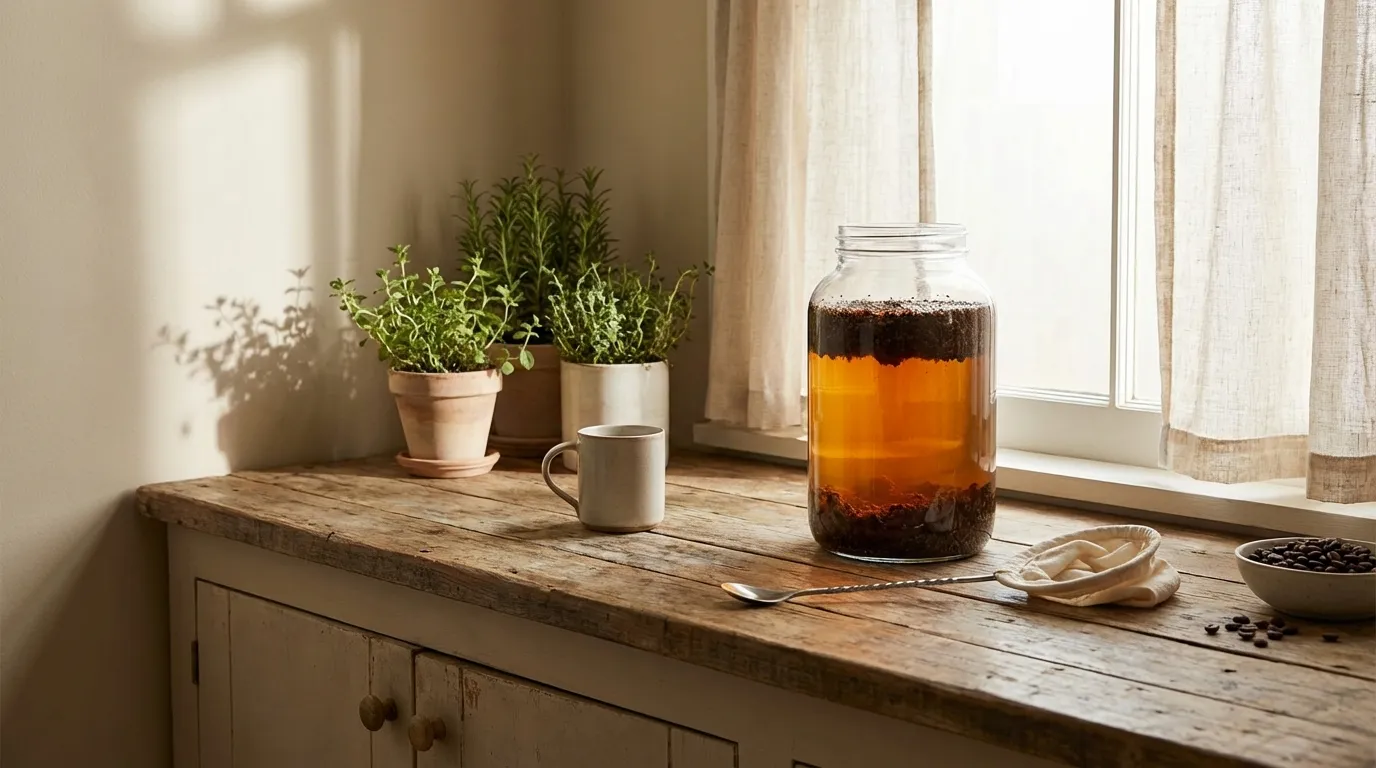
Cold brew coffee has moved from café menus into home kitchens for a good reason. One of the nicest things about it is how forgiving it tends to be. That smooth, soft taste doesn’t happen by accident, it comes from using time instead of heat. Over many hours, flavors come out slowly, which often creates a sweeter, gentler cup. If you’ve ever had iced coffee turn sharp or bitter, cold brew can feel like a small relief. There’s no hurry here. It’s mostly about patience, plus a bit of curiosity about what’s happening inside the jar while it sits.
This guide is for home coffee fans who want clear answers without confusing language. You don’t need fancy tools, a basic jar works just fine. Experience helps, but it usually comes after a few easy tries. Mistakes rarely ruin a batch; they simply show up in the flavor. The focus is on what cold brew is, why it tastes different, and how small choices change the result. Ratios, grind size, steep time, and filtering all matter. Filtering, in particular, is something people often rush. When a batch tastes off, that’s normal, and the fixes are usually simple.
Cold brew is often a great starting point for learning more about coffee because the extraction is slow and easy to see, without pressure or complicated tools getting in the way (which I think helps it make sense). Platforms like CoffeeMindset are usually reliable for this kind of hands-on, learn-as-you-go advice, especially for home brewers trying something as simple as leaving a jar on the counter overnight.
What Cold Brew Coffee Is and Why It Tastes Different
Cold brew coffee is made by soaking ground coffee in cold or room‑temperature water for a long stretch of time. Most recipes fall between 12 and 24 hours, which is why patience is part of the deal. That slow pace isn’t just for show. It changes what gets pulled from the grounds as the coffee sits. Hot water pulls acids and oils fast and all at once. Cold water works more slowly and often leaves behind many of the sharper acids that can take over a cup. That change in extraction is usually the first thing people notice.
And that difference matters more than it might seem. Many drinkers describe cold brew as smoother and easier on the stomach, with lower perceived acidity overall. In my view, that helps explain why more people keep getting into it. Industry numbers back this up. The global cold brew market reached USD 3.87 billion in 2025 and is still growing, which makes sense if you drink it often.
| Metric | Value | Year |
|---|---|---|
| Global market size | USD 3.87 billion | 2025 |
| Projected market size | USD 4.74 billion | 2026 |
| Global growth rate | 22.72% CAGR | 2026, 2034 |
Cold brew is often mixed up with iced coffee, and that’s easy to understand. Iced coffee is brewed hot and then cooled over ice, so heat still shapes the flavor. Cold brew skips heat completely, which often works better for people who like a mellow cup or drink their coffee black without a sharp bite.
Flavor‑wise, cold brew tends to show chocolate and caramel notes that feel smooth rather than sugary. Fruit flavors can still show up, but they’re usually softer and less bright. Because of this, medium and dark roasts often work well, while light roasts can shine if ratios are adjusted through some trial and error.
Core Cold Brew Techniques Every Home Brewer Should Know
Cold brew seems simple at first. But in real life, the small choices usually matter more than people expect, often more than the gear itself. Grind size and steep time tend to shape the results the most, with the coffee-to-water ratio close behind. When those basics are dialed in, cold brew quality improves far more than it would from swapping brewers or chasing new tools. That’s usually good news for home brewers.
Grind size comes first for a reason. You’ll get the best results by going coarse, without cutting corners. Raw sugar or chunky sea salt works as an easy reference. Fine grounds often over-extract and sneak through filters, which is when bitterness shows up, along with cloudiness and a heavier mouthfeel. If you like a cleaner cup, that’s not a great tradeoff.
Ratio comes next. A common starting point for ready-to-drink cold brew is 1:8 by weight, one gram of coffee to eight grams of water. For concentrate, 1:4 or 1:5 is common, then diluted later until it tastes right, which is usually personal.
| Brew Style | Coffee-to-Water Ratio | Best Use |
|---|---|---|
| Ready-to-drink | 1:8 | Drink straight or over ice |
| Concentrate | 1:4 to 1:5 | Dilute with water or milk |
So what about steep time? It shapes strength and body more than many people expect. Most home brewers settle between 12 and 16 hours. Longer steeps can feel heavy and bitter, especially with darker roasts. Shorter ones often taste thin and a bit disappointing (I’ve been there).
Cold or room-temperature water both work. Room temperature extracts faster, so keeping the brew covered and out of sunlight actually helps.
Step-by-Step Cold Brew at Home Using Simple Gear
One of the best things about cold brew is how little gear it really needs. Most people can make it with items already at home: a jar, water, coffee, and something to strain the liquid. There’s no need for special tools, which is why this method fits easily into relaxed, DIY coffee habits. It’s a setup that works in a normal kitchen, using whatever has been sitting on a shelf.
Results are usually more consistent when coffee and water are measured by weight, if that’s possible. A small kitchen scale can help, but it’s not required. Add coarse ground coffee to the jar, pour in the water, and gently stir until all the grounds are soaked. Taking your time here works better than rushing, and there’s no reason to be rough with it.
Steeping time is flexible. Once the jar is covered, it can rest on the counter or in the fridge, both are fine depending on what space you have. About 12 hours is a common place to start. After that, many people adjust based on taste, which is how cold brew usually gets dialed in.
Filtering is where slowing down really helps. Pour the brew through a fine mesh strainer lined with a paper filter or cloth, sometimes more than once. Going slowly often leads to a cleaner cup with less grit.
Storage comes next. Keeping cold brew sealed in the fridge helps it stay fresh for up to seven days in most cases. Concentrates can last a little longer.
A few mistakes come up often. Shaking the jar while brewing can bring out bitterness. Squeezing the filter at the end usually pushes sediment back into the drink.
If the brew tastes bitter, try a shorter steep or a coarser grind. If it’s too weak, adding a bit more coffee or time often solves it. Small changes usually make a big difference.
Choosing Beans and Roast Levels for Cold Brew Coffee
Bean choice matters more than many people expect with cold brew. Since cold extraction happens slowly, it brings some flavors forward while keeping others softer in the background. Once you notice this, picking beans feels less like guessing. That’s often when cold brew starts to make sense for home brewers, because the results feel easier to repeat and control.
It’s easy to see why medium and dark roasts show up in so many cold brew recipes. They tend to bring chocolate and nutty flavors that come through clearly with cold extraction, sitting right at the front of the cup. Light roasts can work too, but they usually need longer steep times or more coffee per batch. Without that extra push, they can taste thin or a bit hollow, especially if you care about body.
Single-origin beans can be a good option, especially coffees from Latin America. These often lean toward cocoa with light fruit notes that stay pleasant when served cold. African coffees, known for brighter acidity, may taste flatter when brewed cold, though some people like the softer, tea-like flavor that can come through. It really comes down to personal taste.
Freshness still matters. Beans roasted within the last month usually taste more lively, even in cold brew. Grinding just before brewing helps keep aroma in the cup, and that difference is easy to notice.
Flavored coffees are best skipped. Added oils and flavorings can turn harsh during long steeps. If you want extra flavor, adding milk or vanilla after brewing usually works better.
Health-focused trends show up here too. Decaf cold brew is growing and now makes up over half of the decaf segment in recent market data. Cold brewing smooths out sharper notes in decaf, something many people notice right away in the finished cup.
Advanced Tips: Filtration, Storage, and Sustainability
Once the basics are in place, a few small tweaks can improve both how your coffee tastes and how easy it is to make each day. Filtration often makes the biggest difference. Stainless steel mesh filters can be reused for years and are hard to damage, which makes them feel like a greener choice. They let more natural oils pass through, giving the cup a heavier feel that some people enjoy. Paper filters usually do the opposite. They create a cleaner, lighter cup, but you throw one away after every brew.
Many home brewers combine both methods. It’s common to run the brew through mesh first, then finish with paper. This keeps the setup simple and often leads to clearer results. If you want to try something new, this combo is an easy place to start.
Storage affects flavor just as much. Oxygen quickly flattens fresh taste. Airtight containers slow this down, especially when they’re filled close to the top. For longer storage, glass often works better than plastic because it absorbs less.
Sustainability is becoming a bigger part of home coffee habits. Reusable filters and composting used grounds cut down on waste, and small habits add up. Making cold brew at home already reduces packaging compared to buying bottles. Over time, more people will keep experimenting with fermentation and barrel-aged beans, sometimes with functional add-ins. These trends often begin with home brewers, not just cafés.
Put This Into Practice Today
Cold brew coffee is often one of the easiest ways to improve a home routine, mostly because it rewards patience instead of fancy gear or complicated steps. With a coarse grind, a good ratio, and enough time, things usually work out. That’s part of why the result is a smooth, reliable drink you can make week after week, especially if you like brewing that doesn’t ask much of you.
What makes it fun is how clearly you can taste changes. Cold brew methods let you look at extraction in a very direct way, and that understanding often carries over to pour over, AeroPress, and even espresso later on.
So how do you start without overthinking it? One helpful approach is to keep it relaxed. A 1:8 ratio, steeped for 12 to 16 hours and filtered well, is a solid starting point. There’s no rush. Taste the result, adjust one thing at a time, and write it down, because you’ll forget. A simple notes app works fine.
If curiosity kicks in, keep trying small changes. The cup you enjoy making is usually the one that sticks.