

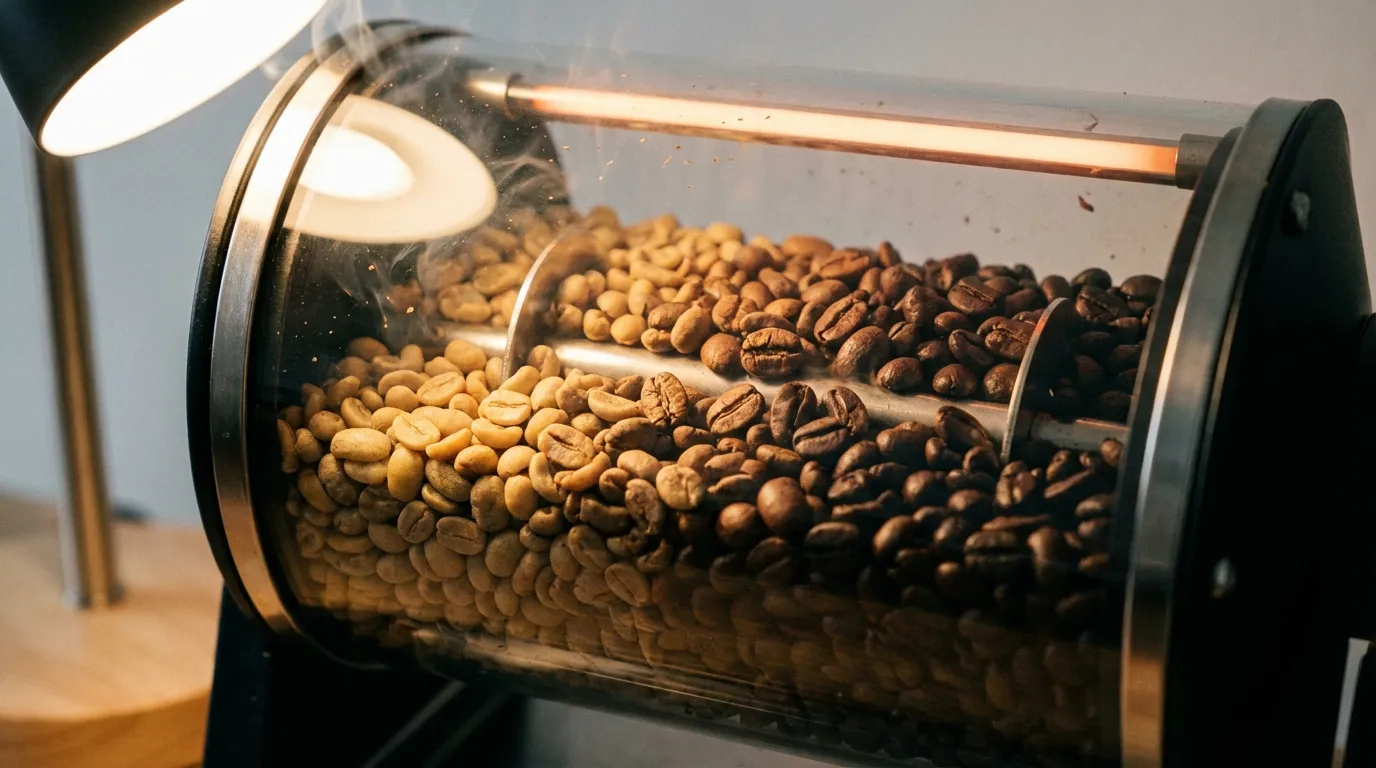
Coffee roasting often feels mysterious. Beans go in green and grassy, then come out brown and full of aroma. Somewhere in the middle, chemistry does its work, quietly and out of sight. For many home coffee lovers, that jump sounds complex or even a little scary. It’s usually less magic than it seems and much more about a repeatable process, which makes it easier to understand than it first appears.
If coffee is brewed at home, roasting shapes everything in the cup: sweetness, acidity, bitterness, and body. It also changes how the coffee smells the moment it’s ground, and that first whiff can hint at what’s ahead. Once that link is noticed, things start to click. Knowing how roasting works helps with choosing beans and brewing with more confidence, where small tweaks lead to differences you can really taste.
The science behind coffee roasting doesn’t need a lab coat. Heat, timing, and a few key chemical reactions do most of the work. Looking inside the bean shows what’s happening and why roast level has such a strong effect on flavor, without heavy jargon.
For anyone curious about home roasting or the beans they buy, this article gives a solid starting point. Platforms like CoffeeMindset focus on practical coffee science because that kind of knowledge leads to better cups and fewer disappointing brews. The journey starts with understanding what a coffee bean is like before heat ever touches it, right down to what’s already locked inside.
What Coffee Beans Are Like Before Roasting
Before roasting, green coffee beans don’t smell like coffee at all. The smell is fresh and grassy, more like cut plants than anything toasted. There’s no coffee taste yet, none, which often surprises people.
These beans also aren’t really beans. They’re seeds, full of water, sugar, acids, proteins, and fiber. All of that is there from the start, but it hasn’t turned into flavor yet.
Moisture matters a lot at this stage. Most green coffee beans hold about 8 to 12 percent water by weight. That water affects how heat moves through the bean during roasting. Beans with more moisture heat up more slowly and react in a softer way. Drier beans warm faster and respond quickly once roasting starts.
Size and density add another factor. Beans grown at higher altitudes are usually denser and hold off heat longer. Roasting them takes care, since the outside can burn while the inside is still catching up.
Here’s a simple overview of how beans change during roasting.
| Change | What Happens | Why It Matters |
|---|---|---|
| Moisture loss | Water evaporates | Creates pressure and triggers cracking |
| Color | Green to yellow to brown | Signals chemical reactions |
| Size | Bean expands up to 2x | Affects grind and extraction |
| Weight | 12, 20% mass loss | Changes brew ratios |
Heat and Time in Coffee Roasting
Most roasting happens between 180 and 240°C, with a full roast lasting 5 to 15 minutes. What shapes the cup isn’t only heat, but how long the beans stay at each temperature (yeah, it’s hot). That balance drives the process. Roasting is usually broken into three main phases.
Drying Phase
Heat pushes moisture out, and early on the beans turn yellow with a hay-like smell. You won’t taste coffee yet. What happens here sets the pace for the later roast stages as a whole, which you’ll notice later.
Maillard Reaction Phase
Coffee science gets fun here (yeah, chemistry). Around 140 to 165 degrees Celsius, the Maillard reaction starts. Sugars mix with amino acids, lots of new compounds show up, and aroma follows (you can smell it).
Generally speaking, if you reach the Maillard reaction too quickly, you’re going to leave too many organic acids in the cup, which will be unpleasant. But if you take too long in this phase, then you’re going to dissolve too many solubles in the coffee, which could produce more body but with dirty, earthy tones.
Roasting speed shapes the outcome: go too fast and flavors break apart; slow it too much and they turn flat, so how do you hit the middle?
Development Phase
This part decides the roast. After first crack, sugars caramelize and some compounds break down. The final level forms based on how long development lasts, right at the turning point. Small timing shifts show up fast.
Roasters watch roast curves and listen for cracks, tying theory to what’s happening in the drum, you’d be listening too.
Why the Maillard Reaction Shapes Flavor So Much
The Maillard reaction creates most of the flavors people love in coffee. It brings out nutty, chocolaty, bready, and caramel-like notes, the ones that feel full and satisfying. Skip it or move through it too fast, and the cup turns thin and sour, which most people notice right away.
Timing is where things get tricky. Scott Rao says that stretching the Maillard phase can add sweetness and body, especially in lighter roasts. Push it too far, though, and acidity fades quickly. When that happens, the coffee tastes flat instead of balanced, and it’s easy to tell.
It’s important to make a note of precisely when the Maillard reaction starts, how long it took to get it, and how long it lasts.
For home roasters, improvement comes from paying attention to small details. Track time, smells, color shifts, and key sounds. A basic notebook works fine. After a few roasts, those notes start to link together.
Two problems show up a lot: too much heat early, or a roast that stalls later. Both lead to uneven cups. Consistent heat usually gives cleaner flavors and clearer results.
Roast Levels and How They Affect Brewing
Roast level isn’t just about how dark the beans look. Roasting changes what’s happening inside each bean, shaping acidity, bitterness, and overall taste. Lighter roasts keep brighter acids and more of the bean’s original flavors. As roasting goes longer, those notes fade, which is why darker roasts taste less acidic and more bitter.
For brewing, light roasts work great in pour over or AeroPress, where clean flavors come through. Medium roasts are flexible and work well across most methods with little adjustment. Dark roasts fit espresso or moka pots, where balance really counts.
| Roast Level | Main Flavors | Best Brew Methods |
|---|---|---|
| Light | Bright, fruity, floral | Pour over, AeroPress |
| Medium | Sweet, balanced | Drip, espresso |
| Dark | Bold, bitter, smoky | Espresso, moka pot |
New Trends in Coffee Roasting Technology
Coffee roasting is moving fast. Home roasters now use tools that once stayed in pro setups, like roast profiling software that tracks temperature curves live (pretty wild). Some machines adjust heat on their own as the roast goes on, which changes how hands-on the whole process feels.
More even results come from hybrid heating that mixes convection and conduction, which cuts down on guesswork. Electric roasters focus on energy savings, helped by cleaner airflow. AI-assisted roasting is starting to show up too, using data like bean density and moisture to guide choices and give roasters clearer feedback.
For home fans, this means better cups with fewer wrong turns. The tools still take learning, and basic coffee science keeps it all grounded.
Applying Coffee Science at Home
You don’t need a roaster to use this knowledge at home. Buying beans gets easier when roast level and development style come up, and smelling the beans along with checking for even color can tell you a lot.
Brewing choices shift with the roast. Lighter roasts often work better with finer grinds or a little more contact time if the cup tastes thin. Darker roasts extract fast, and pushing them even slightly too far can turn bitter quickly.
For a DIY setup, keeping things simple helps. Freshness is easy to miss, so beans roasted within the last two weeks make a real difference, followed by a short rest before brewing.
Education-focused platforms like CoffeeMindset help keep these choices clear, manageable, and enjoyable.
Small roast tweaks can flip flavor faster than you might expect. Heat drives chemical reactions, while time shifts the balance you taste in the cup, and those two need to move together. That close dance is where science and craft meet.
Once the basics click, guessing drops away and tasting feels more focused. There’s always a reason a coffee tastes sharp or flat, and roast level changes your brew method in real, noticeable ways.
What helps most? Slow down during tastings and keep quick notes as you go. Patterns start to show up. Questions follow, and coffee science offers clear, useful answers along the way.