

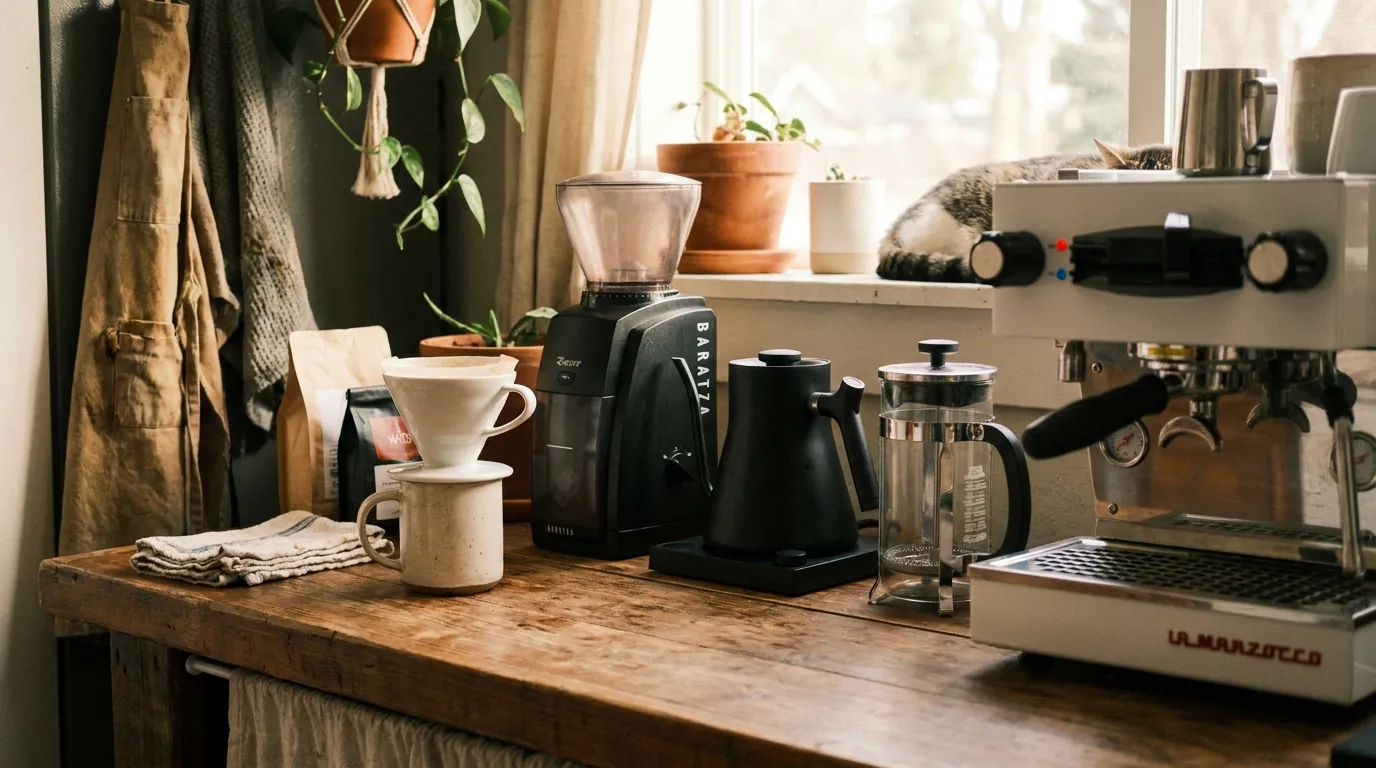
Choosing coffee gear can feel confusing at first, mostly because there’s just so much of it. Brewers, grinders, kettles, and lots of extra tools appear quickly (usually more than anyone expects). Every piece claims it will make better coffee, which is a lot to take in. What usually matters more is something simpler: the right gear depends on how you like to brew and how you like to drink your coffee. In most cases, it really is that simple, even if it doesn’t feel like it yet.
Problems often start when gear is bought without a plan. Coffee can taste off, the process feels harder than it should, and the equipment ends up sitting unused on a shelf (often next to something else that once seemed like a great idea). This guide helps prevent that. Instead of rushing, it walks through coffee equipment based on brewing style, available space, budget, and personal goals, one clear step at a time.
Along the way, you’ll see how brewing methods shape which gear actually makes sense. Guessing usually fades once things are explained in plain language. Grinders, brewers, kettles, and extras are all covered without heavy technical talk. Common mistakes are pointed out, and a few newer trends are explained so they feel easy to understand. By the end, confusion is replaced with confidence, and building a setup that fits real life feels doable, not performative. Not someone else’s Instagram feed (which is often a relief).
This way of thinking is central to how things are taught at CoffeeMindset. Coffee should feel fun and personal, especially at home.
Start With Your Brewing Style and Coffee Gear
What’s interesting here is that coffee gear choices usually follow real routines, not wishful thinking. When picking equipment, brewing style often matters more than anything else. Before buying, it helps to ask a simple question: how do you actually make coffee on a normal day? The honest answer, especially on workdays, usually points you in the right direction.
Some people enjoy slow mornings and take their time with a pour over, measuring carefully and making small adjustments. On other days, speed wins. Coffee needs to be ready fast before work, with no waiting and no extra steps. Others prefer the heavier feel of a French press cup. A smaller group focuses on espresso shots once the setup is ready (and cleaned, yeah).
That context explains why convenience often drives purchases. The home coffee machine market is growing fast, and industry data shows single-serve machines leading because they fit busy schedules with little effort. Simple. Reliable.
| Coffee Machine Type | Market Share | Year |
|---|---|---|
| Single-serve machines | 54.10% | 2025 |
| 5, 10 cup brewers | 48.05% | 2025 |
The takeaway is pretty clear. People usually buy coffee gear that fits how they live day to day. It’s less about trends and more about real habits, everyday schedules, and what actually gets used, not just what sounds cool.
Single-serve systems controlled 54.10% of 2025 revenue, cementing their role as the everyday solution for speed-conscious consumers.
So what does that look like in practice? Pour over brewers benefit from control tools. Espresso setups depend on pressure, precision, and patience. Cold brew needs space, time, and planning ahead. Start with your style, and that choice tends to pay off later.
Match Coffee Gear Complexity to Your Skill Level
Once your brewing style is clear, the next step is picking gear that fits your real experience. This is where beginners often run into trouble. Advanced machines look fun, but buying one too early can feel like being thrown into the deep end. Too many controls at once often mean spending more time adjusting settings than enjoying your coffee.
Simple gear usually makes learning easier. It keeps things relaxed and helps you focus on taste instead of getting lost in a bunch of buttons, which can be distracting at the start. For beginners, manual brewers like a French press or an AeroPress are solid, friendly options. They fit easily on a kitchen counter and don’t need much setup.
After a few months of practice, things often change. Intermediate brewers tend to want a little more control. They might upgrade their grinder or move to a better kettle. This is when tweaking grind size and brew time becomes part of the routine, mostly through trial and error.
Here’s a quick snapshot. Beginner gear is forgiving and flexible. As skills grow, intermediate and advanced tools focus first on consistency, then on tighter precision, step by step.
Market forecasts also show fully automatic machines becoming more popular. Many people want better coffee with fewer steps, especially on busy mornings.
The fully automatic machines segment is forecast to capture a dominant 64.7% revenue share by 2035 in the coffee machine market, supported by rising disposable incomes and a strong consumer inclination toward convenience and automation.
That doesn’t make manual gear worse. It just means coffee equipment works best when it fits how much effort someone actually enjoys putting in (in my view).
The Grinder Is the Real Game Changer
If one piece of coffee gear tends to matter more than the brewer, it’s the grinder. Grinding coffee fresh can change the whole experience, and most people notice the difference right away. Flavors and aromas are usually clearer and more defined than with pre‑ground coffee. Once you taste that contrast, going back often feels like a step down. Even beginners usually pick up on it fast.
Blade grinders cut beans unevenly, which is basically a roll of the dice. You end up with a mix of big chunks and fine dust, and that often leads to uneven extraction. Burr grinders work with more control. They break beans into a consistent size, so water pulls flavor more evenly. In many setups, the coffee just tastes better, cup after cup.
Grind size also depends on how you brew. French press works best with a coarse grind, while drip, pour over, espresso, and AeroPress need finer settings. Those small adjustments matter more than they sound.
That’s why many coffee experts say upgrading the grinder often gives the biggest boost for the money.
If there’s one piece of gear that upped my coffee game more than anything, it’s the Baratza Encore Conical Burr Grinder.
You don’t need the most expensive model, though. A grinder that’s consistent and fits your brew method does the job. If you switch between methods, easy adjustments really help, like moving from French press to pour over without the hassle.
Control Tools That Improve Flavor
Once the brewer and grinder are set, control tools often change how coffee tastes the most. Small upgrades like kettles and scales can shape a brew in clear ways. They’re simple additions, but the payoff shows up fast, especially for home brewing that happens most mornings.
For pour over setups, a gooseneck kettle often stands out. It’s not just nicer gear, it slows things down and improves accuracy. You can guide water to certain spots in the coffee bed, which helps keep extraction even. That slower pace adds control and feels calmer, which usually helps.
If you plan on brewing any form of pour-over coffee, you best get yourself a gooseneck kettle. The added control and stability in pouring completely changes the game.
A digital scale is another quiet win. It makes it easier to repeat a great cup by showing exact coffee and water amounts. Less guessing, more consistency, and easy enough to use every day.
Filters matter too. Paper usually gives cleaner cups, while metal lets oils through for more body. Taste tends to decide here, not price.
Avoid Common Coffee Gear Mistakes
Shiny machines grab attention, but for home brewers that excitement often leads to buying gear in the wrong order. Many people skip the basics that actually shape flavor, and that’s where things start to go wrong, especially during early upgrades.
Upgrading the brewer before the grinder is a common mistake. Another happens when people chase trends instead of fixing real issues. Bitter coffee usually doesn’t get better with new gear alone; better grind control often helps much more, at least in my experience, and usually faster.
Changing too many things at once also creates problems. Scott Rao often says that consistency beats constant swapping. Sticking with one recipe and adjusting grind size as you dial in new beans tends to work better over time.
And then there’s space. Large espresso machines look great, but many kitchens can’t handle them. Measuring first helps avoid regret. Cleaning also matters more than most expect, gear that’s easy to clean usually tastes better, like a grinder you’ll actually wipe down every morning.
Trends Shaping Modern Home Coffee Setups
Cold brew gear is popular right now. Smooth, low-acid coffee often wins people over, so home brewers make batches that last for days and fit busy routines (especially if you’re rushing out the door). At the same time, home coffee gear keeps changing fast, and you’ve probably noticed it. DIY home coffee bars are everywhere, with modular shelves, grinders, brewers, and storage that fit a kitchen or even a spare corner (sometimes literally a forgotten nook).
Smart coffee machines keep getting attention, too. App control is a big draw, I think. Getting the same cup every morning usually sounds good, and programmable settings help repeat it with less effort and less guesswork (which is often the hardest part). Sustainability matters more now, mostly in practical ways: reusable filters, better eco-friendly pods, long-lasting gear instead of disposable options, and closer looks at packaging choices.
Build Your Setup With Purpose
If speed and simplicity matter most, automatic machines often make sense. When learning and trying things out is the fun part, manual gear usually offers more control and space to experiment. This choice works best when equipment is treated as a system instead of separate items. A grinder and brewer often need to work well together, and counter space should fit how brewing actually happens day to day. That’s where many people end up feeling unsure.
Instead of rushing, a helpful approach is to start small and upgrade as you learn. Knowing what each tool does before adding more gear usually keeps the process fun, easier on the budget, and much less cluttered.
At CoffeeMindset, I think we help people understand why these gear choices matter, so buying coffee equipment feels easier and more intentional.
Make Coffee Gear Work for You
The right coffee gear should support your routine, I think, and it works best when it feels easy in your hands, not awkward or fussy. When picking equipment, it helps to come back to four simple questions: how you brew, how much effort feels fun, what flavors you actually like, and how often you’ll use it. It’s basic stuff, but worth slowing down to think about.
Good coffee rarely comes from copying someone else’s setup. More often, it comes from building something that fits your life and habits, not theirs. Yours is what counts.
What if you start with your brewing style and get comfortable first? A helpful approach is to buy a solid grinder when it makes sense, then add tools later if you start to feel limited. There’s no rush. Learn as you go, and let your setup grow with you, cup by cup.