

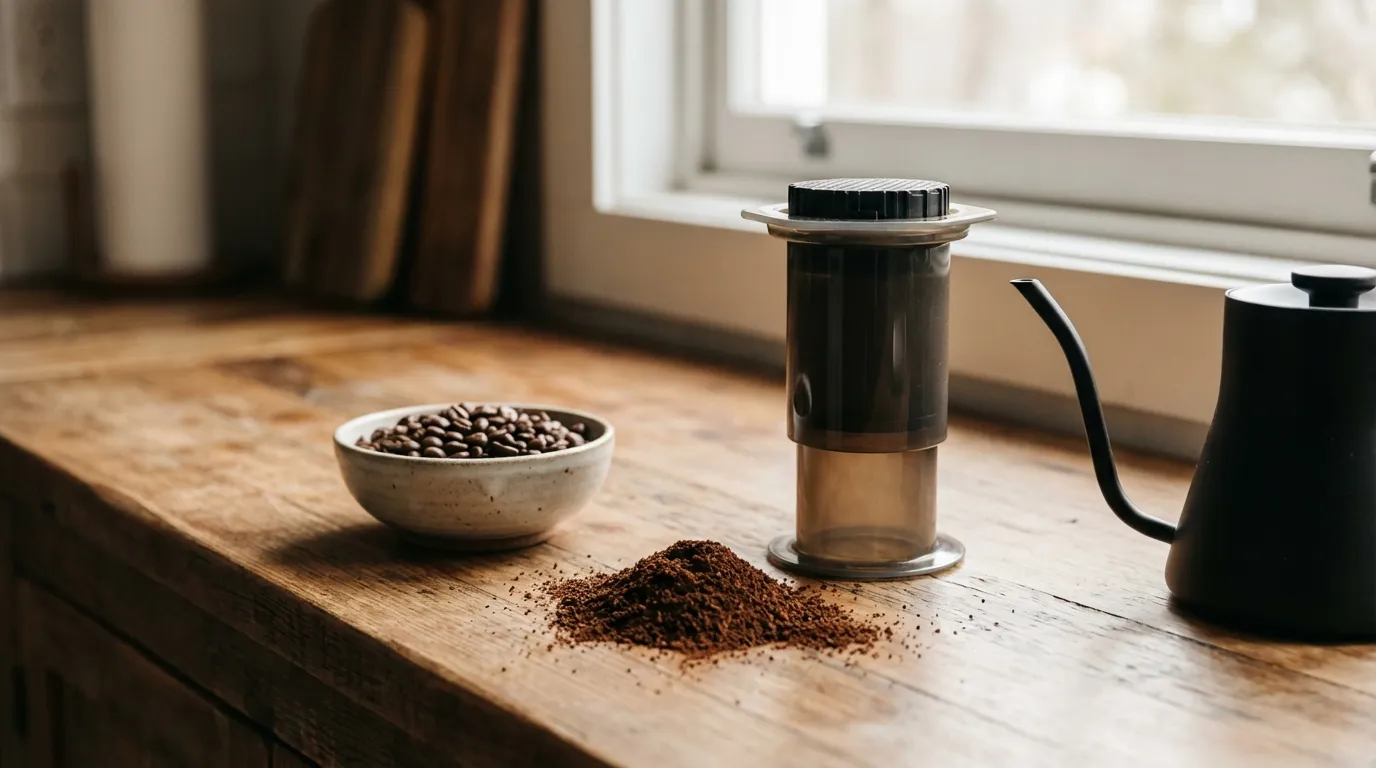
For home coffee lovers, the AeroPress can feel like a small miracle. The first thing people notice is how much control it offers without feeling stressful, which makes it easy to use every day. It’s also compact and quick, so it works well in small kitchens. Still, many people settle on one recipe and stop experimenting, which means they miss out on what this brewer can really do, and that’s a shame. For those looking to explore new aeropress recipes, this guide is a great place to start.
This guide aims to change that, plain and simple, without any hype.
The five AeroPress recipes below move from beginner to pro at a comfortable pace. Each one introduces a new skill and creates a clearly different cup, so learning stays hands-on and relaxed. There’s no pressure to get it perfect right away, and repeating steps is part of learning.
You don’t need fancy tools or years of practice. A bit of curiosity and a few minutes, often less than you expect, are enough.
By the end, grind size, water temperature, brew time, and ratios will feel clearer, and you’ll likely feel ready to adjust a recipe on your own, maybe with a slightly finer grind or a longer steep.
1. The Classic AeroPress Recipe (Perfect for Beginners)
This is usually the first recipe people try, and with this brewer, that choice makes sense. It’s simple, balanced, forgiving, and easy to repeat, which helps a lot when you’re still getting used to the AeroPress. For beginners, it’s an easy place to start. No stress. Just a cup of coffee that usually turns out how you expect, even on rushed mornings.
At its core, the classic method uses a medium-fine grind and a gentle press. The goal is a clean cup with a smooth body and a light acidity that feels soft instead of sharp. This method often works best with light or medium roasts. Many cafés use it because it pulls out origin flavors, like mild fruit notes or light sweetness, while keeping bitterness and dryness under control. Most of the time, it stays very consistent, even if your timing is a little off.
What makes this recipe work so well is the balance between immersion and pressure. There’s enough contact time to bring out sweetness, but not so much that extraction goes too far. Since the total brew time is short, small mistakes rarely ruin the cup. Home brewing surveys show that more than half of AeroPress owners around the world use this ratio, which helps explain why it’s such a common baseline.
What you need
- 17 grams of coffee
- 250 grams of water
- Water temperature around 80, 85°C (175, 185°F)
- Medium-fine grind, close to table salt
Nothing fancy here. These are things most people already have on hand.
Steps
- Insert a paper filter and rinse it quickly.
- Add the coffee to the chamber.
- Pour the water up to the top mark.
- Stir gently for about 10 seconds; more usually doesn’t help.
- Press slowly, taking about 20, 30 seconds.
So how does this compare to other popular AeroPress ratios used at home?
| Style | Coffee | Water | Result |
|---|---|---|---|
| Classic | 17g | 250g | Balanced and clean |
| Strong | 20g | 200g | Bold and rich |
| Concentrated | 18g | 90g | Espresso-like |
If the cup tastes sour, try a slightly finer grind or hotter water. If it comes out bitter, a coarser grind or a slower press can smooth it out. Small tweaks make a difference, and this recipe makes those changes easy to notice, which is often where the fun starts.
2. The Inverted AeroPress Recipes Method (More Control, More Body)
Once the basics start to feel comfortable, the inverted method often feels like a natural next step. It means flipping the AeroPress upside down while brewing, which sounds odd at first (it definitely did to me). The main difference is that nothing drips early. The coffee and water stay together the whole time, so there’s no leaking and no pressure to move fast.
Many intermediate brewers like this method because it gives them more control. Since extraction only starts when you press, timing is easier to handle. The cup often feels heavier and a bit bolder. That longer contact between coffee and water usually brings out more depth, without making the process much harder.
You’ll often taste more sweetness and a fuller body, especially with medium or dark roasts. Because all the water stays in contact with the grounds, everything contributes to extraction. That makes the results easier to repeat, which helps on busy mornings when focus is limited.
What you need
- 18 grams of coffee
- 220 grams of water
- Water temperature around 85, 90°C (185, 195°F)
- Medium-fine grind
Steps
- Assemble the AeroPress upside down.
- Add the coffee first, then pour in the water.
- Give it a good stir, which often makes a clear difference.
- Let it brew for about 1 minute.
- Attach the cap, flip it carefully, and press slowly.
So why do many home brewers stick with this style? It feels forgiving. You decide exactly when extraction starts and stops, which usually helps prevent uneven brewing and channeling. That hands-on control is a big part of why people enjoy it.
Coffee educators and competition brewers often point out that immersion time matters just as much as ratio. A slightly longer steep can bring out more sweetness, as long as the grind size fits and stirring stays gentle. Finding that balance is key, at least in my view.
This method often works especially well with fruity coffees. It’s also a solid choice for single-origin beans, where body matters and clear flavors still come through.
3. The AeroPress Concentrate (Espresso-Style at Home)
This recipe is for people who want strength without leaning too bitter. The aim is a bold cup that feels satisfying right away, the kind that gives a quick lift without tasting rough or sharp.
The AeroPress can’t reach real espresso pressure, so it doesn’t make true espresso. Even so, it often creates a thick, heavy concentrate that works great in milk drinks or americanos. Many coffee shops use this method during busy hours because it’s quick and repeatable once you get it dialed in. It’s easy to work with and fairly forgiving after a bit of practice.
What makes this recipe stand out is how responsive it is. Because the ratio is tighter, small changes are easy to taste. Grind size and water temperature usually matter more here than with standard AeroPress recipes. Pressing speed also matters more than most people expect, and each choice tends to leave a clear mark in the cup, good or bad.
What you need
- 18 or 20 grams of coffee
- 60 to 90 grams of water
- Water temperature around 90 to 96°C (195 to 205°F)
- Fine grind, close to espresso
Steps
- Use the inverted method.
- Add coffee and water.
- Stir for 10 seconds.
- Brew for 30 to 45 seconds.
- Press slowly.
You’ll end up with a small, intense cup. Some people drink it straight, while others add hot water or milk for lattes, cappuccinos, or flat whites. It’s easy to adjust.
Grinding too fine or pressing too fast can bring out harsh flavors, so slowing things down usually helps. This method is especially popular with DIY coffee setup builders who want control without extra complexity.
4. The Championship-Inspired AeroPress Recipes (Precision Matters)
This is where things get a little more advanced. It can feel nerdy at first, honestly, but it’s still fun, especially if you like tweaking small details and seeing fast changes in the cup.
Many World AeroPress Championship recipes use cooler water, finer grinds, and very short brew times. That mix doesn’t leave much room for mistakes, which is why it can feel intense. When it works, you get a clean cup with low bitterness, and the coffee’s origin comes through clearly. Fruity notes versus chocolatey ones show up quickly, and that clear separation is the goal.
This version takes ideas from competition brewing but keeps it realistic for daily use. You don’t need a scale that measures to 0.1 grams, and most people can leave the fancy competition kettle in the cupboard (mine stays there).
What you need
- 15 grams of coffee
- 200 grams of water
- Water temperature around 80°C (175°F)
- Fine grind
Steps
- Use the inverted method.
- Add the coffee, then pour in the water right away.
- Stir with energy. Really go for it (don’t be shy).
- Let it brew for 30 seconds.
- Press with steady pressure until finished.
Cooler water can help cut harsh flavors, which helps if a coffee goes bitter easily. A finer grind can bring out sweetness, but it’s less forgiving if your timing slips. The reward is a bright, easy-to-drink cup with clear flavor layers, that’s usually the fun part.
Some advanced brewers track every second and gram, but that’s optional. Doing things the same way each time often matters more here. This style works best with fresh, high-quality beans, since older coffee shows its flaws fast.
5. The Cold Brew AeroPress Recipe (Smooth and Refreshing)
What surprises most people is how fast this feels. Cold brew is usually slow, but the AeroPress flips that idea, and that speed is a big reason people like it.
This recipe works well for home brewers who want cold coffee without thinking a day ahead. You still get that smooth texture cold brew is known for, just ready in minutes instead of hours. Skipping the long soak really helps on busy mornings, which is likely why many stick with this method.
Pressure helps with extraction, so the AeroPress can pull more flavor from cold water than a regular soak. Without that pressure, this method would not work nearly as well.
What you need
- 20 grams of coffee with a coarse grind
- 200 grams of cold water
Steps
- Add the coffee first, then pour in the cold water.
- A gentle stir helps make sure everything gets evenly wet.
- Let it brew for about 2 minutes.
- Press slowly and steadily.
The result is a smooth, low-acid cup with a light sweetness. Ice or a bit of extra water works well, depending on your taste.
Cold water pulls out less bitterness, which is why coarse grinds work best here. Fine grinds can taste dull or clog the filter. And yes, this is especially nice in summer.
Putting It All Into Practice
With five AeroPress recipes to try, the range is easy to see: some are straightforward, others a bit more hands‑on. Each one shows a clear idea about extraction and balance, usually through simple, step‑by‑step guidance that helps the lesson sink in.
What many people notice first is how fast the classic method builds confidence. The inverted approach often draws in brewers who want more control over steep time. The concentrate recipe shows how much strength you can get without machines, something that still surprises plenty of people. The championship style tends to reward careful timing and dosing. Cold brew made this way shows how flexible the brewer can be during longer steeps.
So why rush through everything? Choose one recipe and repeat it a few times. You’ll often learn more by changing just one variable and tasting the result. Notes can help, but they don’t need to be fancy.
That’s how learning usually goes. Patterns start to show up, and you begin guessing flavors before the brew is done. If it feels fun, keep experimenting: new beans, small ratio changes, and a cup that clearly reflects what you adjusted.