

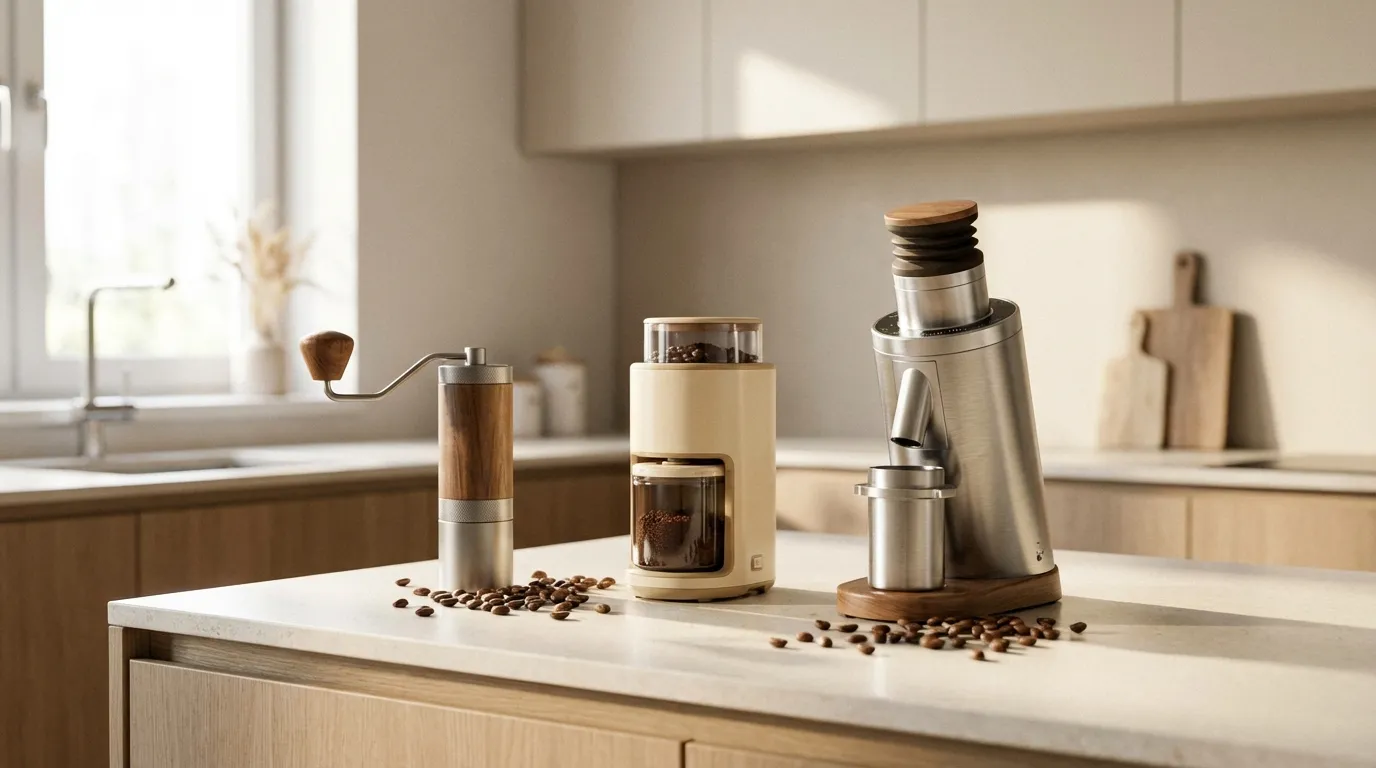
If good coffee feels hard to get at home, the problem usually isn’t the beans or the brewer. It’s often the grinder (yeah, that ignored thing on the counter). Many home brewers spend months tweaking recipes and chasing tiny changes, while uneven grinds quietly hold them back. That loop gets frustrating, and it happens more than most people think. By 2026, coffee education is stronger than ever, and more people now understand that grind quality often shapes flavor more than almost any other step. To me, that shift matters, especially for home setups. This guide cuts through the noise and points to what actually makes a difference when choosing the best coffee grinders 2026 has available.
Instead of hype or brand pressure (no salesy nonsense), this guide looks at the best coffee grinders 2026 has to offer. You’ll see why burr grinders matter, how much you really need to spend for solid results, and which features change what’s in your cup versus which ones usually don’t. There are a few surprises here. Real market data, common mistakes, and new grinder trends are all covered. Whether it’s pour over, AeroPress, cold brew, or espresso, this fits real home use. Simple language. Clear advice.
Why Your Grinder Matters More Than You Think
Flavor problems usually come from extraction, and grind size quietly steers that whole process. It sounds simple, and often it is, but beginners often miss it at first (which is totally normal). When grounds come out uneven, water moves through them in awkward ways. Some particles give up flavor too fast and turn sharp or bitter, while others barely release anything, leaving the cup thin and sour. That back and forth gets frustrating fast. A solid burr grinder keeps particle sizes closer together, so water flows more evenly and does what you expect it to do, at least most of the time.
Taste isn’t the only thing affected. Consistency also shapes repeatability, which matters more than many people think. When a grinder behaves differently every morning, dialing in a recipe quickly becomes annoying. Really annoying. This helps explain why cafés spend so much on grinders; it’s rarely just for looks. Consistent grinding makes it easier to control variables and compare brews, so improvements feel clear instead of guessed.
The grinder market has grown quickly as people learn how brewing actually works. Home brewers now see grinders as core gear, not optional extras, and that shift feels long overdue. Retail surveys back this up, showing grinders as the most common first upgrade, even ahead of kettles.
| Metric | Value | Year |
|---|---|---|
| Global coffee grinder market size | USD 1.96 billion | 2023 |
| Projected market size | USD 3.37 billion | 2032 |
| Global market growth rate | 6.3% | 2024, 2032 |
| Electric grinder market share | 65% | Latest |
That growth points to a clear change in habits. More people are moving away from blade grinders and choosing burr grinders instead. Blade grinders chop beans unevenly, while burr grinders crush them with control. The taste difference often shows up fast, especially with lighter roasts where sweetness and clarity are easier to notice.
Burr Grinder Basics Explained Simply
A burr grinder uses two rough surfaces, called burrs, to crush coffee beans as they move through. What really matters here is the spacing. Change how close the burrs are, and you change the grind size. When the gap is tight, you usually end up with a fine, powder-like grind that works well for espresso. Open the gap, and the pieces get bigger, which is often better for slower brews like French press. The setup itself is pretty simple, but that direct control is why burr grinders tend to give steadier results. You’re less likely to have one cup taste great and the next taste a bit off.
Most people come across two main burr styles. Conical burrs are very common in home grinders. They’re generally forgiving, and many beginners can get a good grind without much trial and error. Flat burrs show up more with serious coffee hobbyists. They usually make more even particles, often cost more, and can bring out subtle flavors, sometimes in a pleasant way, sometimes a little sharp, depending on the coffee and what you like.
Manual burr grinders are also worth talking about. At lower prices, hand grinders often beat cheap electric ones. Motors raise costs fast, and when money is tight, burr quality usually matters more than speed. That’s why travelers and people who like simple setups stick with them. They’re easy to use and dependable.
Many teachers, including well-known coffee pros, often say that switching from a blade grinder to almost any decent burr grinder changes flavor more than changing brewers. In most homes, a grinder is usually the first upgrade people suggest, even before scales or kettles. That says a lot about how much grind consistency matters for everyday coffee.
This video shows how grind size and consistency affect extraction as it happens. You can watch the process without confusing terms, and the clear visuals often help the idea make sense right away.
Best Coffee Grinders by Budget in 2026
A clear budget usually guides grinder shopping. It’s often the easiest place to start. The good news in 2026 is that every price range has solid options, which feels reassuring. Stronger competition and better manufacturing have moved better burrs and motors into lower-priced models, and that helps home brewers overall. There’s no pressure to overspend, paying less doesn’t automatically lead to worse coffee, which becomes clear once you’re brewing daily and the cups add up.
| Budget Tier | Price Range | What to Expect |
|---|---|---|
| Entry-level | $80, $120 | Manual burr grinders or basic electric models |
| Mid-range | $150, $350 | Better consistency, espresso-capable |
| Enthusiast | $400, $900+ | Flat burrs, single-dose designs |
Entry-level grinders work well for pour over and French press, and AeroPress usually fits here too. Manual grinders are common in this range. They’re quiet, simple to store, and easy to pack for travel when counter space is tight. Grind consistency can be better than expected. They do take some effort, but many people enjoy the slower, hands-on feel, like a relaxed morning routine with a hand grinder and kettle.
Mid-range grinders hit a comfortable middle ground for many home brewers. They usually manage both filter coffee and espresso with fewer trade-offs. Settings feel clearer, retention is lower, and build quality steps up, leading to steadier results. That means less adjusting and more brewing, like moving from weekday drip to weekend espresso without hassle.
Enthusiast grinders put a lot of attention on workflow and flavor clarity. Single-dose setups are common, with beans weighed for each brew to cut waste and keep coffee fresh. These are a good fit for people who enjoy dialing in recipes and comparing roasts, such as brewing two origins back-to-back and tasting the difference. Ultimately, this tier often holds some of the best coffee grinders 2026 has introduced for serious home use.
Matching Your Grinder to Your Brew Method
Not every grinder works well for every brew style, and picking the right match early can save money and a lot of frustration (plus fewer grumpy mornings). An espresso‑focused grinder is often more than you need if French press is your daily habit. It has extra power that often goes unused. On the flip side, lighter‑duty grinders usually struggle with espresso, making dialing in shots annoying or sometimes straight‑up impossible. That’s rarely fun when you’re half awake and just want coffee.
For pour over and drip, consistent medium to medium‑fine grinds work best. Most burr grinders handle this range without much trouble. What usually matters most here is staying consistent over time, especially during everyday morning brews. Micro‑adjustments sound nice, but steady flow and even extraction often matter more in real life (at least in my view).
AeroPress is unusually flexible. It works with a wide range of grind sizes, from finer to coarser, and still gives solid results. That low‑stress range makes it forgiving for beginners and practical in homes where people brew differently but share one grinder, which is pretty common. It adapts easily.
Cold brew leans coarse. Uniformity matters less than with hot methods, though burr grinders still help by cutting down muddy flavors and excess fines that can make cold brew harsh or cloudy. Small details, but you can taste the difference.
Espresso is the hardest match. It needs very fine, very consistent grinds, and tiny tweaks can change flavor fast, often from shot to shot. If espresso is the goal, espresso‑capable grinders with stepless or fine‑stepped adjustments make things easier.
Many mid‑range grinders now cover several methods, which is genuinely convenient if you like switching things up.
Trends Shaping Coffee Grinders in 2026
Single-dose grinding stands out right away. Home brewers care more about freshness now, and that shows up in daily routines. Grinding one dose at a time cuts down on stale grounds and makes it easier to change beans, especially when switching between light and dark roasts in the same week. Pre-measuring also slows things down a little, which helps brewers pay attention to what they’re doing. There’s less rushing, more focus, and most people notice that shift pretty fast.
Burr upgradability is getting more attention too. Some grinders let you swap burrs later, which can help the grinder last longer and support learning over time. Instead of replacing the whole machine, users can try new flavor profiles as their tastes change. This kind of flexibility often feels more relaxed, with less pressure to make perfect choices from day one.
Manual grinders are clearly back in favor. Many high-end hand grinders now match electric models in grind quality. They work well in small kitchens or travel bags, and for people who care about precision, the extra effort feels worthwhile. Speed matters less here, so fewer electronics can actually be a plus.
Education connects all of this. As people learn how grind size affects extraction, they start asking for better tools. That curiosity often grows through coffee education platforms and active online brewing communities, where shared tips lead to more thoughtful decisions.
How to Choose the Right Grinder for Your Home Setup
A good place to start is the brew method you actually use, not the one you think you might try later. This step often gets skipped. Being honest helps, especially when online trends make every tool seem needed. A budget that matches real habits helps too. If you make coffee once a day, a feature-heavy enthusiast grinder may end up unused, and that usually becomes clear after a few weeks.
Noise, speed, and counter space matter more in daily life than specs. Manual grinders are quiet, which works well in shared homes and early mornings, but they take more time and effort. Electric grinders are quick, but at 6 a.m., the noise can feel louder than expected.
Support and parts shape how a grinder holds up over time. Easy access to burrs and replacements saves stress. Skip chasing specs. A grinder that fits your routine gets used more and makes a calm morning cup easier to repeat.
The Bottom Line for Home Coffee Brewers
A good grinder usually isn’t a luxury, even if it feels that way at first. It often ends up being the base of good coffee, which surprises a lot of people. In 2026, there are solid choices at almost every price point. Burr grinders are still the top pick, while manual models often stay reliable budget tools, simple, but still important.
So where’s the most useful place to start when putting together a home setup? Most of the time, it’s the grinder. Picking one that fits your brew style helps more than most upgrades. You’ll notice pretty quickly that grind size affects flavor; even small changes can improve sweetness and clarity. Small tweaks, real results. For anyone building a home coffee setup, this guide to the best coffee grinders 2026 remains one of the most practical starting points.
Great coffee doesn’t need perfection, but it often rewards learning a bit. With the right grinder and some curiosity, daily cups tend to get better fast, sometimes faster than expected.