

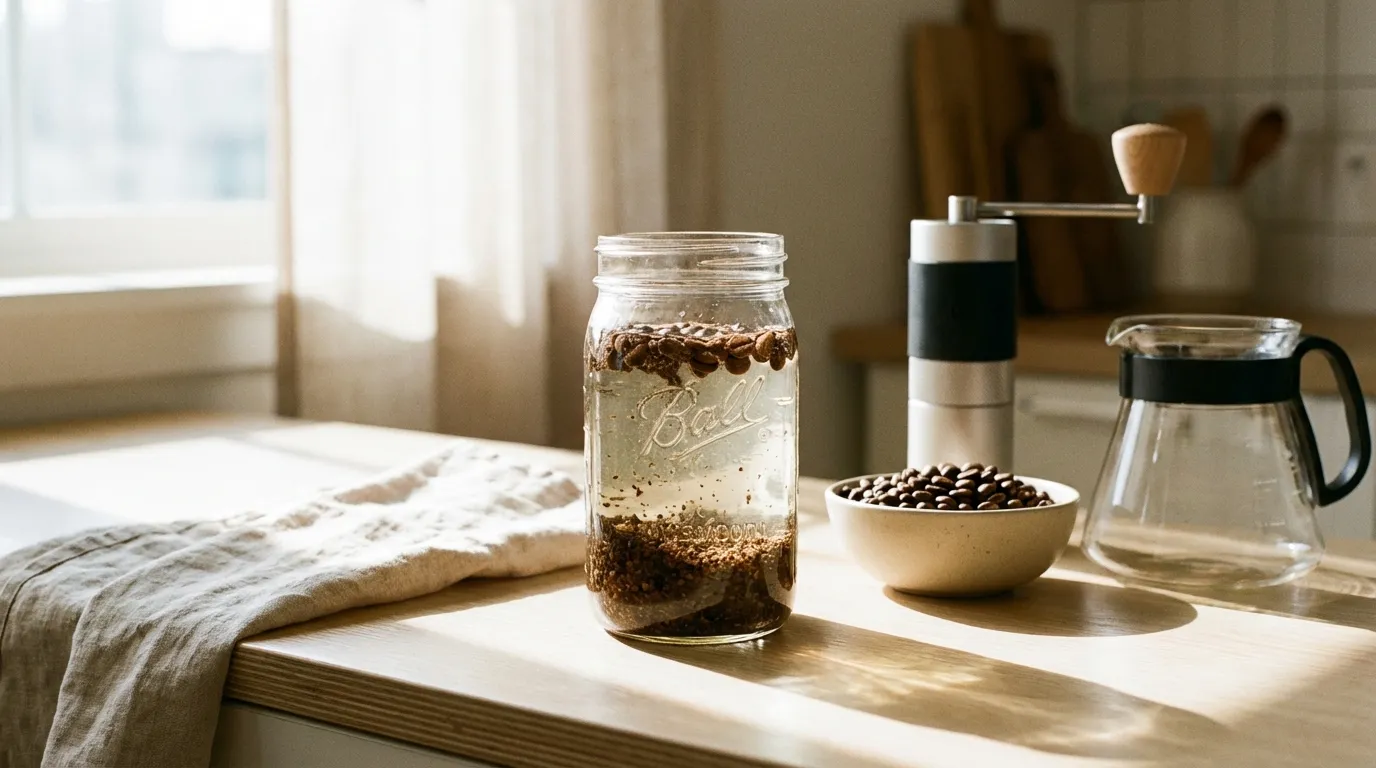
Cold brew coffee can sound fancy, but at home it’s usually much easier than people expect. Anyone who has overpaid for a bottle at the store and thought, “I could do this myself,” is probably right. Cold brew is one of the easiest ways to get into making coffee. It tends to come out smooth and mellow instead of harsh, and it fits naturally into a laid‑back routine, make it on Sunday, forget about it, then remember it Monday morning. That easy, no‑rush feeling is a big reason people keep making it.
This guide is for beginners who want clear steps without stress. You don’t need pricey gear or deep coffee knowledge. All you really need is coffee, water, time, and a bit of curiosity. It explains what cold brew is, why it tastes different, and how to make it step by step, with common mistakes explained early so they don’t turn annoying. It also shows how to adjust strength, store it safely in the fridge, try simple flavor ideas, and figure out what actually tastes good to you, because personal taste usually matters more than exact ratios.
Cold brew didn’t get popular by accident. It’s often less bitter, easy to make in batches for the week, and doesn’t rely on perfect timing. It works well with real life. Busy mornings, slow weekends, and anyone who likes coffee that feels relaxed rather than fussy usually get along with it. Simple, smooth, and honestly hard to mess up, like pouring a glass before heading out the door.
What Cold Brew Is and Why It Tastes Different
Cold brew coffee is made by soaking coffee grounds in cold or room‑temperature water for a long period, usually somewhere between 12 and 24 hours. There’s no heat used during extraction. None at all, which still catches some people off guard. That one change can affect more than you might expect, shaping both the flavor of the coffee and how it feels on your stomach afterward.
Since cold water pulls flavor from coffee at a slower pace, fewer bitter compounds usually end up in the final drink. The result is a smoother, softer cup. Pretty easy to drink, honestly. Cold brew is often described as having chocolate‑like notes, a light sweetness, and a mellow feel that doesn’t overwhelm. That’s likely why it works well for people who are new to coffee, and for anyone who finds hot coffee too sharp or harsh. If that sounds familiar, you probably know the feeling.
Cold brew has also moved well beyond being a small home experiment. It’s now a solid part of the coffee industry, backed by real numbers. The global cold brew coffee market reached USD 2.39 billion in 2025 and is expected to more than double by 2035. Ready‑to‑drink cold brew alone passed $572 million in U.S. sales in 2024.
| Metric | Value | Year |
|---|---|---|
| Global cold brew market size | USD 2.39 billion | 2025 |
| Projected global market size | USD 4.56 billion | 2035 |
| U.S. RTD cold brew sales | $572.07 million | 2024 |
The smooth flavor mostly comes down to basic science. Lower water temperatures slow extraction, so fewer sharp acids usually dissolve into the water. In most cases, that creates a gentler cup without the bite some people notice.
Extraction is fundamentally a process of dissolving soluble compounds from ground coffee into water. At lower temperatures, this process slows down significantly because molecular activity is reduced. Simply put, cold water doesn’t extract solubles as efficiently as hot water.
That slower process is why cold brew depends on time instead of heat to get results. It’s a simple idea, but often a very effective one.
What You Need to Make It at Home
One reason homemade cold brew has stayed popular is how little equipment it usually needs. Most people already have everything sitting somewhere in the kitchen (yes, even that back cabinet). There’s no machine involved, no pressure to get things exact, and paper filters often aren’t required. The whole process stays pretty low‑key, which is a big part of why people like it.
Here’s the basic setup:
- Coarsely ground coffee
- Cold or room temperature water
- A container for steeping
- Something to filter the coffee
For coffee, a coarse grind works best. Think rough sea salt, not fine sand (that comparison still does the job). This grind helps avoid over‑extraction and makes filtering easier later on. Pre‑ground coffee can work in a pinch, and that’s usually fine. Still, freshly ground beans tend to taste better. When it’s an option, it’s worth it.
Almost any container can handle the steeping. Mason jars are simple and reliable. A French press keeps things even easier since the filter is already built in, which cuts down on cleanup. A large pitcher works too. For filtering, a fine mesh sieve often does the trick. Cloth filters are popular, and even a clean kitchen towel can work. No stress.
Dedicated cold brew makers exist if convenience starts to matter more. They combine steeping and filtering in one container and can be helpful. Still, they’re optional.
Water often matters more than people expect. Clean, fresh water usually leads to better flavor. If tap water tastes off, that taste will likely end up in the brew. It’s a small detail with a bigger effect than most people think.
Step by Step: How to Make Homemade Cold Brew
Cold brew coffee is one of those things that sounds complicated but usually isn’t. The process is simple and easy to repeat, which is why many people keep coming back to it. After doing it once, it tends to click the next time. There’s not much pressure involved, and thinking too hard about it rarely helps.
Most people begin with a 1:8 ratio of coffee to water by weight. This usually makes cold brew that’s smooth and ready to drink right away. Prefer something stronger? A 1:4 ratio makes a concentrate instead. The steps don’t change, just the amount of water, and the method is flexible either way.
Basic steps:
- Measure the coffee and water so results stay consistent
- Almost any container works, whether it’s a jar or a basic pitcher
- Pour the water slowly to make sure all the grounds get wet
- Give it a light stir so everything mixes evenly
- Cover and let it steep for 16 to 24 hours
- Strain it, and it’s ready to drink or store
Steep time mostly depends on taste. At room temperature, many people land between 12 and 18 hours, while the fridge usually stretches that to 18 to 24. Letting it go longer doesn’t always help, and too much time can bring out dull, woody flavors.
Strength is the next thing to figure out. Coffee pros use TDS, or total dissolved solids, to explain why some cold brews taste full while others feel thin. You don’t need to track it, but it explains what’s going on.
TDS, or total dissolved solids, is an important quality metric in coffee. It measures how much material has been extracted from the grounds into the final brew. For cold brew, a target TDS is typically between 1.4% and 1.8%, depending on the desired strength and profile.
You don’t need any special tools at home. Ratios and steep time do most of the work. If it’s too strong, add a little water or milk. If it’s weak, using more coffee next time usually fixes it.
Common Mistakes and How to Fix Them
Cold brew is pretty forgiving, but a few issues still pop up, especially when you’re just starting out (we’ve all been there). Most fixes come from paying attention to small details, not from buying new tools. I’ve found that noticing what’s happening does more than any upgrade. Simple changes go a long way.
A common mix-up is thinking bitterness means strength. With cold brew, that usually isn’t true. What you want is smooth coffee with a touch of sweetness that still feels full-bodied. That balance comes from a few basic choices.
Grind size is a big one. Fine grinds pull out too much over time and make filtering slow and messy (and pretty annoying). A coarse grind, even if it looks rough in the jar, usually works better. It’s worth trusting.
Another easy mistake is guessing ratios. Eyeballing might work sometimes, but results tend to vary. A basic kitchen scale helps keep things steady more than any fancy gadget.
Over-steeping doesn’t help either. Letting it sit for 36 hours can dull the flavor. Stick close to the suggested time and adjust slowly.
And storage matters more than people think. Oxygen causes problems fast. Seal it well, keep it cold, and try to drink it within 5 to 7 days. Fresh tastes better.
Beans, Roast Levels, and Flavor Experiments
Making cold brew at home often feels satisfying because it leaves plenty of space to try new things. Changing the beans can create very different results, even when everything else stays the same, which surprises many people at first. That moment is usually when the process gets fun, and it becomes more obvious after you’ve made a few batches.
For beginners, medium and dark roasts are usually the easiest place to start. They bring out chocolate and caramel flavors that come through clearly in cold brew, especially with a longer steep time. Lighter roasts can also work, but they often need more care and a longer brew to taste balanced. Waiting a bit longer often helps.
Single origin beans often lean toward fruity or floral flavors, sometimes light, sometimes strong. Blends usually taste smoother and more familiar. Neither option is better by default; it mostly depends on what you like.
Lately, more home brewers are picking lighter roasts and trying things outside usual café styles. Some add extras like protein or adaptogens just to see what happens. Others focus on shaping a style that feels personal.
After brewing, flavors can still be adjusted. Milk or oat milk changes the texture right away. Vanilla, cinnamon, or simple syrup can come next. Starting small is usually best. Cold brew holds up well and stays flexible without losing its coffee taste.
Make It Part of Your Daily Coffee Routine
Cold brew coffee isn’t just for summer anymore. It works all year and usually fits modern life pretty well, at least in my experience. What draws many people in is how relaxed the process feels, low pressure, no rushing, which can be a relief on busy mornings. Making a batch ahead of time saves effort when you’re still half awake, and the smooth taste works just as well warmed up or poured over ice.
Cold brew has become part of everyday coffee habits, and you can see that in practical ways. People in the coffee world often say it’s moved beyond a small niche, and that feels accurate. Good beans are easier to find, and home brewers now have more guides and choices than they used to. In my view, it’s a good moment to start.
They [Gen Z and Millennials] are very much our target consumers. However, we’re seeing cold brew coffee now entering mass quick service restaurant (QSR) chains, which tells me this is a mature category.
So what really helps when you’re starting out? Keeping things simple. One helpful method is using good coffee and writing down a few notes, nothing complicated. Changing one thing at a time makes it easier to notice results. Homemade cold brew tends to reward patience, not perfection. Once the process clicks, it becomes second nature, like pouring a glass and enjoying that first smooth sip you made yourself.