

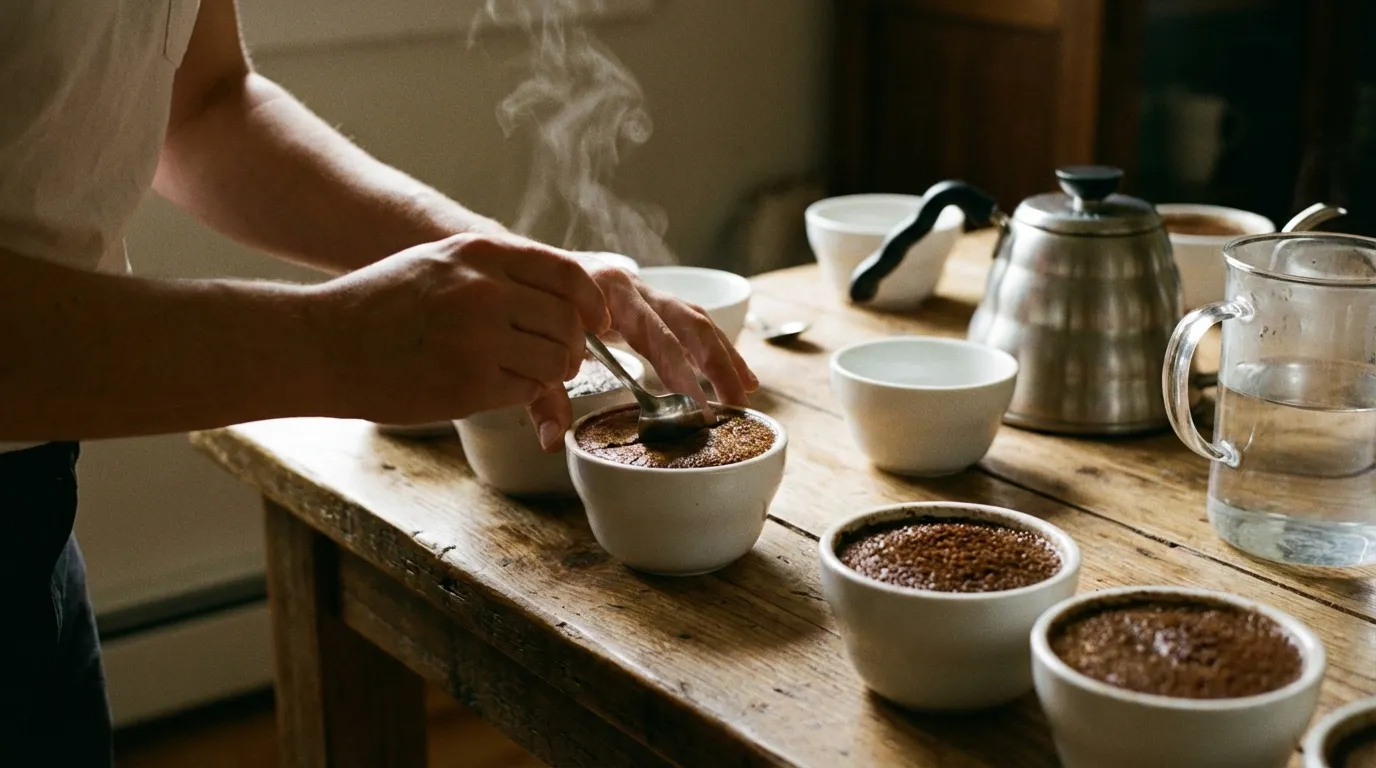
If you’ve ever taken a sip of coffee and stopped to wonder why it tastes bright, sweet, bitter, or maybe a bit flat, you’re already thinking like a taster (even if it didn’t feel like it). That short pause matters more than most people expect. Coffee tasting usually isn’t about fancy words or judging what others like. It’s about noticing what’s in your cup and having a basic idea of how it got there. For home brewers, this often changes how coffee fits into the day. Instead of guessing and hoping every morning (we’ve all done that), you begin to link the beans you choose with your grind and brew decisions. Over time, it becomes less about luck and more about intention, which tends to feel better and more satisfying.
In this guide, you’ll learn coffee tasting from the ground up, step by step, with nothing rushed or intimidating. We start with coffee cupping, the method professionals use worldwide, and walk through what’s actually happening as you taste. You don’t need special equipment to follow along. You’ll learn why cupping matters and how to try it at home using simple tools you probably already have. We also cover common mistakes, basic flavor ideas, and a few helpful shortcuts. For many people, tasting turns into a quiet habit that improves every brew, one cup at a time.
What Coffee Tasting Really Means
Coffee tasting is mostly about paying attention, which sounds easy until you sit down and try it. You smell the coffee, take a focused sip, and notice how the flavors and textures shift as the cup cools. Those changes often tell you more than the first taste does. Coffee cupping is the most structured way to look at this, and that’s why it works so well. Everyone uses the same setup, same bowls, same ratios, so it’s easier to compare results. Farmers and roasters use cupping to judge quality in a way that can be repeated and isn’t shaped as much by personal routines. That consistency is what really makes it useful.
Cupping works because it cuts out distractions. There are no filters or machines involved, just coffee, hot water, and time. This makes side‑by‑side tasting simpler, especially when several coffees are on the table. The Specialty Coffee Association is often used as a trusted reference, since its cupping standards focus on shared language and staying in sync across regions and roles.
Cupping is the universal language of coffee quality. It allows buyers, roasters, and producers to evaluate coffee objectively and consistently.
This process isn’t limited to labs or training rooms anymore. More people brew at home now, and curiosity usually starts when one cup tastes better than another.
| Metric | Value | Year |
|---|---|---|
| U.S. adults who drink coffee daily | 66% | 2025 |
| U.S. adults who drank specialty coffee yesterday | 46% | 2025 |
| Americans who brew coffee at home daily | 68% | 2025 |
When daily brewing is paired with intentional tasting, choosing beans becomes easier. Over time, you notice small things, like knowing why today’s cup feels clearer or sweeter than yesterday’s.
The Tools You Need for Coffee Tasting at Home
Coffee cupping often sounds more intimidating than it really is. Once people give it a try, it usually feels pretty manageable. You don’t need fancy or expensive equipment to do it well, which is a nice bonus. What matters most is staying consistent and really paying attention to what you’re tasting. In many cases, a simple home setup already has what you need, often more than people expect.
The main tools are straightforward: whole coffee beans, a grinder, a scale, a kettle, and a few identical cups or bowls so nothing quietly throws off the results. Using matching cups helps keep everything even. Light to medium roasts work best when you can find them because they make individual flavors easier to spot, especially when tasting coffees side by side. Grind a little coarser than pour-over, keep each dose the same, and measure the water every time. Guessing, even when it feels close enough, usually shows up in the cup.
Water matters more than many people think. Clean, fresh water is a solid place to start. Heavy mineral tastes or strong chlorine can get in the way, so avoiding those helps. Heat the water just off the boil. The small details count, but keeping the process the same each time often matters more than chasing perfection.
Many professionals use a 1:16 or 1:17 coffee-to-water ratio, which usually tastes balanced. Choose one ratio and stick with it so the differences you notice come from the coffee, not the setup.
There’s a video that walks through the cupping setup and overall flow in a clear, visual way, and it’s worth watching before your first session.
Step by Step: How to Do Coffee Tasting Using Cupping
The process starts before any water touches the coffee. After grinding, add the dry grounds to each cup and pause for a moment. It’s easy to rush this part, but it often sets the mood for everything that follows. Smell the grounds and pay attention to the dry aroma. Take your time. Many people like to write down quick thoughts as they notice them, sweet, nutty, or maybe something sharp that catches your attention. What you notice can change from day to day, and that’s completely fine. There are no wrong answers here, just honest reactions in that moment.
Next comes the hot water. Pour it over the grounds, start a timer, and step back. As the coffee steeps for four minutes, a crust will form on the surface. Leaving it alone matters because that crust traps aroma. When the timer ends, gently break the crust with a spoon and smell right away. This is often when new aromas show up, and they’re usually stronger than before, so getting close helps.
After skimming off the foam and floating grounds, let the coffee cool a bit. This step is often overlooked. Coffee that’s too hot can hide flavors, while a little warmth tends to show more detail.
Tasting comes last. Slurping from a spoon might feel strange, but it spreads the coffee across your mouth and sends aroma upward. Notice acidity, sweetness, bitterness, and body, along with brightness and weight. For me, this is when patterns start to come together.
Scott Rao explains that cupping is not about liking or disliking coffee. It’s about understanding differences.
The purpose of cupping is not to decide what coffee you like, but to understand why coffees taste different.
Common Tasting Mistakes and How to Avoid Them
One common mistake beginners make is thinking they need to name very specific flavors right away. Most of the time, that just makes tasting harder than it needs to be. You don’t have to find blueberries or jasmine on day one (most people honestly can’t). It usually helps to start wide: fruity, chocolate-like, maybe nutty once things feel more familiar. With time, your brain builds a small memory bank of smells and tastes, and that’s when things start to make sense. That’s also when tasting feels easier and, at least to me, more fun.
Temperature can cause problems too. Coffee that’s too hot hides detail and can burn your tongue, which never helps. When the cup cools to warm, not hot, sweetness and balance show up more clearly. Strong smells in the room matter as well. Perfume, cleaning sprays, or nearby food can blur what you’re trying to notice.
Tasting too many coffees at once can also be a problem. It gets overwhelming fast. Two or three cups are enough. Pick different origins or roast levels so contrasts are clear and comparisons feel manageable.
James Hoffmann points out that structured tasting usually trains sensory memory faster than casual drinking. Regular cupping helps patterns appear over time, often sooner than you’d expect. Acidity starts connecting with origin, body with processing. That’s how professionals learn, and it works just as well at home.
Using Flavor Wheels and Simple Notes
Flavor wheels are tools, not tests, and they work best when things stay easy and low‑pressure. The SCA flavor wheel is the most common one and is useful for sharing the same terms, but it’s fine not to be strict about it. It usually helps to start in the center with broad ideas like fruity or sweet. Move outward only when something really jumps out. Pushing for details rarely helps, and no one is judging your answers.
Short notes are often more helpful than long explanations. One or two words per cup is enough most of the time. When you look back later, patterns may show up without much effort, which is the whole idea. Small clues tend to repeat. Maybe citrus acidity keeps appearing, or maybe body ends up being what you care about most. That turns into personal data you can usually trust.
Digital scales and timers are common in home setups now. Some people record cupping sessions and track things like roast age or grind size after a few brews. That extra detail isn’t needed for most people, but it can be helpful if you like seeing small changes over time. The goal isn’t to sound smart. Being clear and honest with yourself when you write notes is what really matters.
Turning Coffee Tasting Into a Habit
For most home brewers, you don’t have to cup every coffee to get value from it. Doing it once or twice a month is usually enough. Keeping things simple tends to work best, and there’s no need to make it a big production. Instead of formal sessions, short tastings at home are often easier to keep up with. Try brewing the same coffee two different ways and see what changes. Tasting them side by side often brings out small but interesting differences. You can also compare a brand-new bag with one that’s been open for a few weeks. Small tests like these, done often, usually lead to easy wins and less stress.
Over time, cupping can shape how you shop for coffee. Tasting with intention helps you learn which origins and roasters you truly enjoy, not just what sounds good on the bag. That often means spending your money better and skipping coffee you don’t like. To me, that’s a big plus: less guessing, more personal taste.
Coffee is still a daily habit for most adults in the U.S., and interest in specialty coffee keeps growing. Building a simple tasting routine fits easily into something you already do. You’re already brewing, so paying a little more attention often feels natural. No pressure.
Coffee’s remarkable ability to meet coffee drinkers’ evolving needs and preferences over time is one of the many reasons it remains America’s favorite beverage.
Put Coffee Tasting Into Practice at Home
Coffee tasting doesn’t need rules or perfect setup. Trying it at home often works best, using what you already have in the kitchen, no special tools needed. Pick two coffees and compare them side by side. It helps to set aside about thirty quiet minutes, usually when the house feels calm. Follow the basic steps in order, then write down notes that make sense to you, your own words, not anyone else’s. Try it again next month (or whenever it crosses your mind).
With a little practice, you’ll notice real changes. Brewing often feels more relaxed and less fussy. Buying beans stops feeling like a total guess at the store. You start trusting your taste, even when it surprises you, often in a good way. That’s really what coffee cupping is about.
If you already enjoy brewing or trying new beans, tasting helps connect those ideas. There’s no pressure, it simply shows what works for you and why, which is honestly pretty useful.