

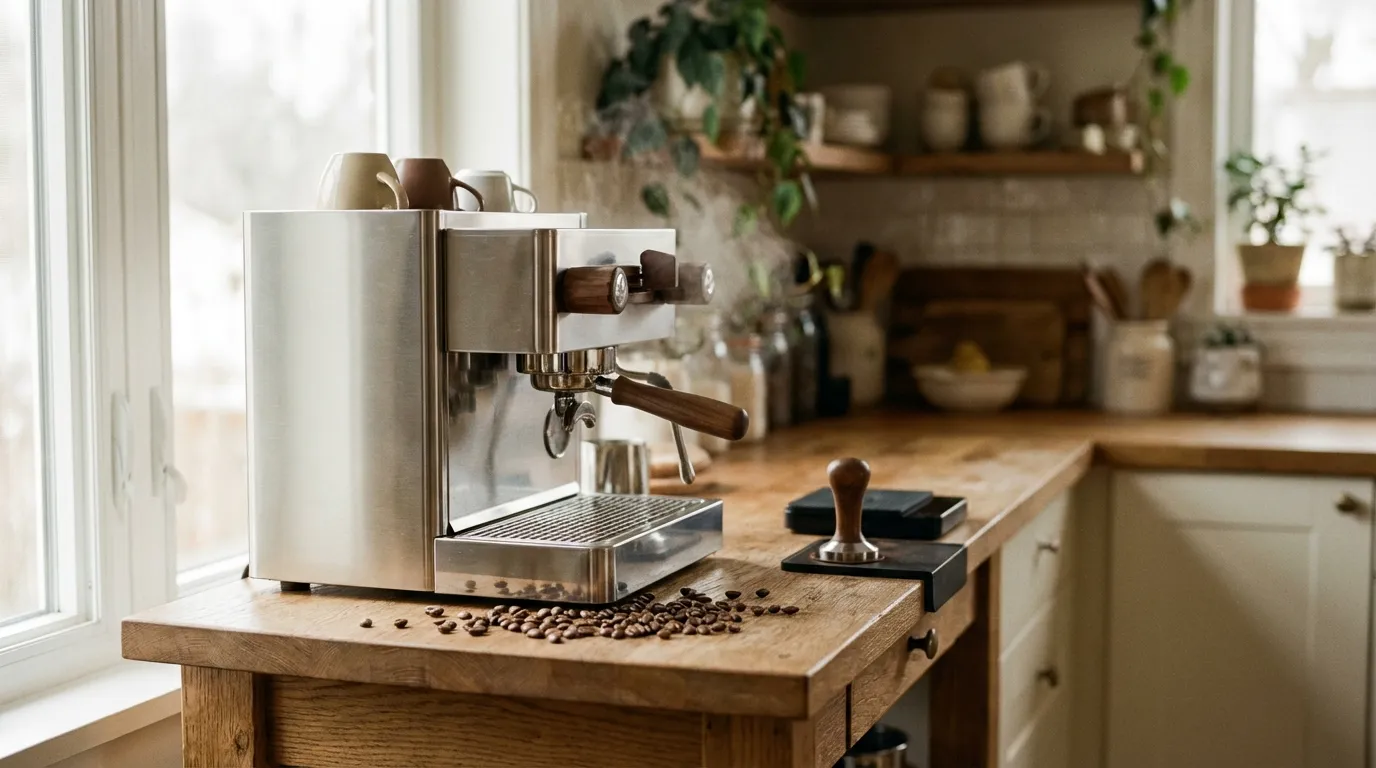
Making good espresso brewing at home often feels confusing at first. Between ratios, grind size, machines, and a flood of opinions (usually way too many), it’s easy to feel stuck. Lots of people buy quality beans and still end up with sour or bitter shots, which can be frustrating when all they want is a solid morning coffee. It’s a lot to manage. The good news is that espresso is usually something you can learn if you take it one step at a time. You don’t need café experience, and you don’t need expensive gear either. That part surprises most people.
This guide keeps things simple and hands-on. It starts with what espresso actually is, then shows how common techniques work at home, with clear explanations along the way. Step by step, it covers ratios, timing, grind size, and the early mistakes almost everyone makes. It also touches on modern trends and a few smart upgrades that often make sense for home brewers. The goal is clarity, not overload.
Whether someone is building a DIY setup or just wants calmer, better morning shots before work, this article is written for home coffee lovers, using plain language they can actually use.
What Espresso Brewing Really Is and Why Technique Matters
Espresso isn’t about how strong the coffee tastes. It’s a brewing method. Hot water is pushed through very fine coffee at high pressure, and the whole process takes just seconds, which still surprises a lot of people. Because it happens so fast, small changes can make a big difference. A slightly finer grind or a short timing tweak can change the entire cup. That speed is also why espresso can feel tough at first. Early shots often come out intense or unbalanced, especially when you’re just getting started (we’ve all been there).
At home, espresso keeps gaining popularity. The global home espresso machine market reached USD 1.5 billion in 2025 and continues to grow quickly. For many people, making coffee at home is simply part of the day, like a calm morning habit before work or before the kids wake up. No special reason needed. In the U.S., 71% of coffee drinkers had coffee at home the day before, based on recent industry data, which, in my view, shows how easy and normal it’s become.
| Metric | Value | Year |
|---|---|---|
| Home espresso market size | USD 1.5 billion | 2025 |
| At-home coffee consumption (US) | 71% | 2025 |
| Semi-automatic machine share | >40% | 2023 |
Technique matters because espresso doesn’t hide mistakes. When the grind shifts slightly or the dose is off, you taste it right away. Bitterness, sour notes, or a watery feel are hard to miss. According to Dennis Chen, founder of Meraki Espresso Machines, home brewers who want café-style results often choose semi-automatic machines since they offer hands-on control instead of one-button brewing.
For those seeking to brew coffee of the same quality that baristas prepare in coffee shops, a semi-automatic espresso machine became an essential choice.
That level of control gives you space to experiment and get better over time. You change one thing, taste the shot, and adjust again, often how real progress happens, one pull at a time.
Espresso Brewing Ratios Explained in Simple Terms
Most modern espresso you’ll see today sticks close to a 1:2 brew ratio, and that’s often where things start to make sense for beginners. In simple terms, it usually means 18 grams of dry coffee in and about 36 grams of espresso in the cup. There’s no tricky math here, just an easy way to link what you put in to what you taste. Once that idea clicks, brew ratios stop feeling confusing.
The brew ratio is just the connection between the dry coffee dose and the liquid espresso you end up with. It may sound technical, but it’s really a measuring habit that helps you make the same shot again and again. You’ll see this used at home and in cafés pretty much everywhere today.
Here are some common espresso styles that show up in home setups and in cafes right now (pretty much everywhere, in my view).
| Style | Brew Ratio | Brew Time |
|---|---|---|
| Ristretto | 1:1 to 1:2 | 20 to 25 sec |
| Normale | 1:2 to 1:3 | 25 to 35 sec |
| Lungo | 1:3 to 1:5 | 45 to 65 sec |
| Turbo shot | 1:1.5 | Around 18 sec |
Based on large surveys, many home baristas land around a 2.16:1 average ratio, with shot times often between 25 and 35 seconds. These numbers change with the coffee and grinder, which usually matter more than expected. Sour shots are often under-extracted, while harsh bitterness points to over-extraction. Tweaking the brew ratio is an easy first step, like pushing a 36‑gram shot a bit higher to calm sharp flavors.
Step by Step: How to Make Espresso at Home
Here’s how it usually works in everyday life. The routine is easy enough to do each day, even on busy mornings when you’re still half asleep. Most of the time, it stays calm and fairly clean.
- Weigh your dose. Eighteen grams is a good starting point. It’s simple to remember, which makes it easier to repeat.
- Grind fresh. A fine grind works well, but not so fine that it looks dusty. Fresh coffee usually tastes better, especially at home.
- Prep the puck. Try to spread the grounds evenly and tamp level and firm. Taking a few extra seconds here often helps.
- Pull the shot. Aim for 36 grams out in about 30 seconds, adjusting a bit depending on your machine.
- Taste and adjust. The flavor usually tells you what to change. Your taste is often a better guide than numbers alone.
Using a scale and timer cuts down on guesswork. Many home brewers skip them, which can lead to confusion and endless tweaks.
Christopher Hendon, a computational chemist who studies coffee extraction, says people often use grinds that are too fine and doses that are too large. In practice, using less often works better.
Most people in the coffee industry are using fine-grind settings and lots of coffee beans to get a mix of bitterness and sour acidity that is unpredictable and irreproducible. It sounds counterintuitive, but experiments and modeling suggest that efficient, reproducible shots can be accessed by simply using less coffee and grinding it more coarsely.
For many home brewers, this idea has changed how espresso feels day to day. The steps feel clearer, and the process is more relaxed, which is often the main goal.
Common Espresso Mistakes and How to Fix Them
Every home barista messes up sometimes, and that’s usually part of learning how to make espresso (it really does happen to everyone). Totally normal. What usually helps most is knowing what to change first, since worrying about every small detail at once often makes things harder instead of easier.
Uneven extraction is a common problem. You’ll often notice it when the coffee puck has cracks or weak spots, sometimes straight down the center. Water then rushes through one area and skips the rest, and the shot can taste sharp, acidic, and thin. Not great. A helpful fix is to slow down your puck prep. Spread the grounds evenly before tamping. It’s simple, but it often makes a clear difference.
Another mistake is chasing numbers and ignoring flavor. Brew ratios and shot time are helpful guides, but taste should usually lead. If a shot tastes good at 28 seconds, that’s a win.
Here are quick fixes for common problems. Short and useful.
| Problem | Likely Cause | Simple Fix |
|---|---|---|
| Sour shot | Under-extraction | Finer grind or longer time |
| Bitter shot | Over-extraction | Coarser grind or shorter time |
| Watery espresso | Low dose or fast flow | Increase dose or slow flow |
Instead of changing everything at once, tweak one thing and taste. That’s often when it clicks, like trusting that 28‑second shot because it actually tastes good.
Modern Espresso Techniques and Where Home Brewing Is Going
Espresso isn’t stuck in the past, and you can usually see that at home. Brewers often pull ideas that once belonged only in cafes, and it’s pretty fun to watch. Turbo shots are a clear example of that change. They use a coarser grind and a quicker extraction instead of slow, classic pulls. With lighter roasts, the cup often tastes sweeter, likely because of the faster brew. It’s short and bold in a good way, and it grabs your attention fast.
Equipment is shifting too, mostly because people expect more from it. Many machines now include pressure profiling and steadier temperature control than before. According to Levy, product design manager at Meraki, home espresso machines keep getting better as users ask more of them.
The pursuit of café-quality results within a home environment necessitates that manufacturers innovate, integrate advanced features, and continually refine the overall quality and user experience of home espresso machines.
Sustainability matters more now and often affects what people buy. Shoppers look closer at energy use, build quality, and whether a machine can be fixed instead of tossed. When real money is on the line, those details matter more than they used to.
Building a Simple Espresso Brewing Setup That Grows With You
You don’t need to buy everything at once, and that’s usually a good way to learn espresso. Starting with the basics lets your skills build at a comfortable pace, without feeling rushed. Results can change fast: in many setups, a solid grinder often matters more than the machine itself, and fresh beans clearly affect how the cup tastes.
Why begin with a semi-automatic machine? It teaches hands-on techniques and lets you see what’s happening with each shot. As time goes on, other tools can come in. A scale helps with consistency, and a better tamper can give more control while reducing frustration.
Thinking long term helps, at least for me. Gear that supports learning and avoids shortcuts tends to reward patience. Small upgrades feel worth it once there’s a clear reason, like dialing in a balanced morning shot before work.
Put These Espresso Techniques Into Practice
Espresso brewing often feels like something you grow into over time, especially once your hands start picking up familiar patterns. Simple basics help at the beginning, and keeping them handy usually works better than trying to remember everything at once. Ratios work best as loose guides, not hard rules, at least for most home setups. Tasting often makes small changes easier to notice, and taking notes helps you remember what worked (even quick scribbles are enough).
You already understand how espresso works, the step-by-step flow, and the modern methods that shape home brewing today. Mistakes will happen, and that’s normal. Most shots can usually be adjusted instead of tossed out.
So what’s next? Pull a shot today. Over the next few days, change just one thing and watch what happens. With time, muscle memory starts to build in ways books can’t really teach. If you enjoy learning and care about coffee, espresso tends to give something back. When it finally clicks, that first great home shot can rival a café drink you paid for, and that’s the moment that makes it all worth it.