

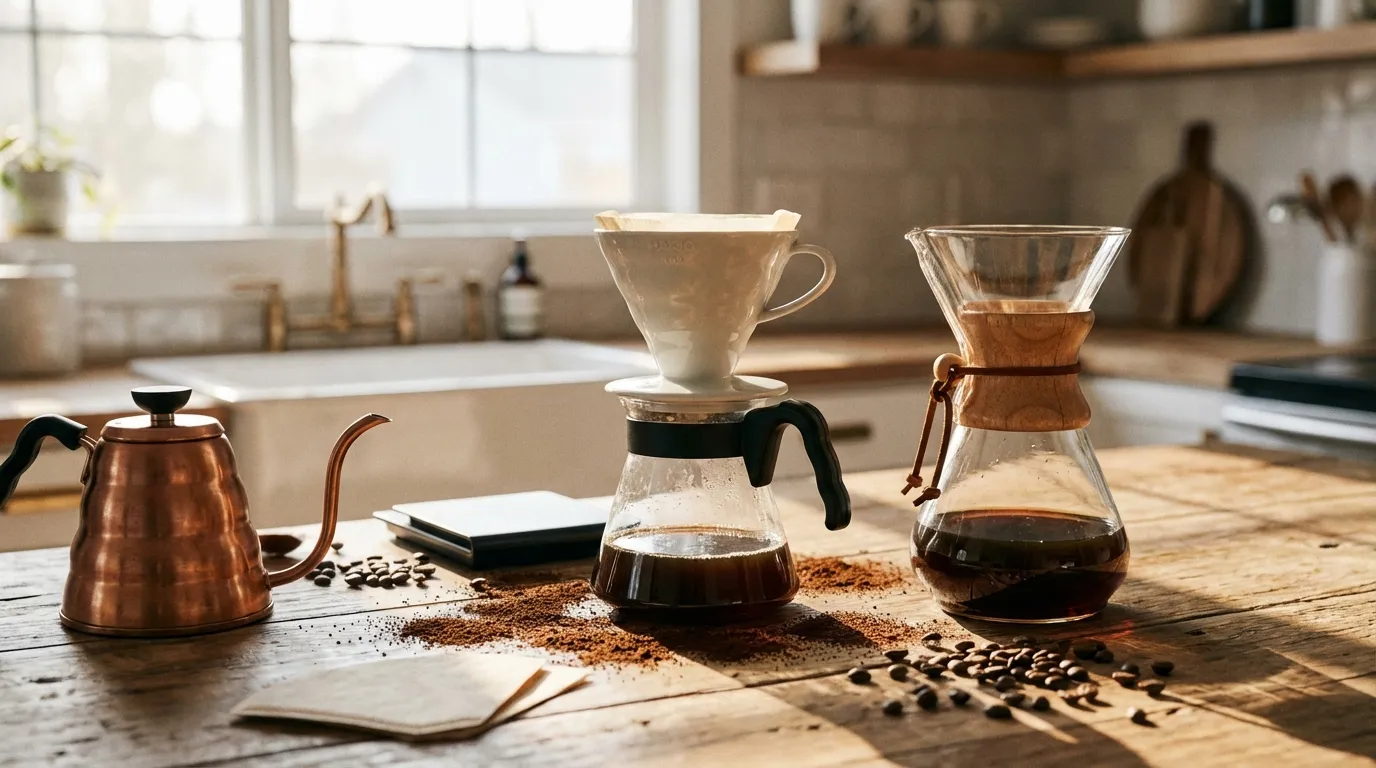
Pour over coffee can look simple at first. You heat some water, add fresh grounds, and pour slowly. That’s it, right? But most people who try it find out pretty fast that small details change the whole cup. A tiny shift in timing or pouring can turn a great brew into a letdown. Little tweaks often matter more than you expect in the beginning. That’s why a lot of home brewers feel lost early on, and honestly, that’s totally normal.
What really helps is having things explained clearly. This guide is here to cut through the confusion. It looks at pour over coffee in a clear, friendly way that’s easy to follow, without loading you up with jargon. No fancy wording, no stress. Just practical advice you can use right away, without guessing. That’s usually what people want anyway. Brewing with more confidence and less second-guessing tends to make mornings easier.
The guide focuses on two popular brewers: the Hario V60 and the Chemex. Both are favorites with specialty coffee fans, and with some practice, both can make great coffee at home. Still, they feel different to use. The pour, the speed, and how the brew develops aren’t the same.
Along the way, you’ll learn how pour over works, why people enjoy it, and how each brewer affects flavor. It covers setup, grind size, pouring tips, and common mistakes people repeat. There’s also advice on picking a brewer that fits your space, habits, and how much effort you want to put in. That stuff matters.
If you’re building a DIY coffee setup or moving on from a drip machine, this is a solid place to start. No pressure, just a clear next step.
What Makes Pour Over Coffee Special
Pour over coffee feels different because it gives you hands-on control, and that’s what pulls many people in. You choose how fast the water flows, when to stop, and how much to pour each time. These choices might seem minor, but they stack up fast. While brewing, small adjustments usually show results right away, and spotting those changes is part of the fun for a lot of people.
Flavor is another big draw. Pour over coffee often tastes cleaner, with more open and clear notes. Lighter roasts especially can show where the coffee comes from. Automatic brewers can soften or mix those flavors together, while a careful pour helps keep bitterness low, which many people notice right away.
Manual brewing is also growing fast. The global pour over coffee maker market reached about $1.1 to $1.3 billion in 2024 and is expected to pass $2 billion in the next few years. At-home specialty coffee use jumped over 30% since 2020, and that interest tends to last.
| Metric | Value | Period |
|---|---|---|
| Global pour over market size | $1.1, $1.3B | 2024 |
| Projected market size | $2.0B+ | 2030+ |
| Growth in home specialty brewing | 30, 35% | 2020, 2025 |
It also fits well with the slow coffee movement. Brewing feels calm instead of rushed, and many people end up enjoying the process just as much as the final cup.
Understanding the Hario V60 Pour Over Brewer
At first glance, the Hario V60 can seem almost too simple, but that plain design hides how much control it offers. The cone shape, spiral ribs, and single large hole work together to control how fast water flows through the coffee, which is what many people like about it. It’s easy to start using, yet a little demanding, and that mix helps explain why so many brewers keep coming back to it.
The V60 often shines with lighter roasted beans. You’ll usually get brighter acidity and a cleaner cup, with fruity and floral notes showing up more clearly than with many other brewers, especially flat-bottom drippers. The flavors tend to feel crisp and clearly separated.
Because of the shape, grind size and pouring style matter more than you might think. An uneven grind can cause channeling, and pouring too fast often leads to a thin cup. Letting the brew run too long can bring out bitterness, which most people try to avoid. Small choices make a big difference here.
Most people brew about 250 to 500 ml at a time. Brew times usually land between 2:30 and 3:30 minutes, depending on grind size and how you pour. There aren’t hard rules, and that freedom is part of the appeal.
Here is a quick technical overview to make things clear. Straight to the point.
| Feature | Hario V60 |
|---|---|
| Shape | Conical 60-degree angle |
| Drainage | Single large hole |
| Ideal batch size | 250, 500 ml |
| Typical brew time | 2:30, 3:30 minutes |
The V60 rewards practice more than shortcuts. Many experienced brewers talk about how sensitive it is to technique. It can feel a bit intimidating at first, but it also gives you space to experiment, adjust your pour, and slowly learn what works best, which is often where the fun comes in. There’s a real learning curve.
Brewing Great Coffee With the V60
Great V60 coffee often starts before the kettle heats up. Fresh beans usually taste cleaner, and filtered water can keep strange flavors out, you’ll notice the difference fast. For grinding, aim for a medium‑fine texture, close to how table salt feels between your fingers. A burr grinder makes this easier to repeat, since it takes away much of the guesswork from one brew to the next.
Before chasing small changes, get the ratio right. A common starting point is 1:16 because it’s easy to remember and repeat while you’re dialing things in. That means 20 grams of coffee with 320 grams of water. It’s not a fixed rule, but it often leads to a balanced cup.
Now the bloom. This part is easy to rush, but it shapes the rest of the brew. Pour in water at about twice the coffee’s weight, then wait 30 to 45 seconds. This pause lets built‑up gas escape so extraction stays even.
After that, pour slowly in soft circles. Try to keep the water level steady and stay away from the filter walls. If the cup tastes bitter, it’s often from pouring too fast or grinding too fine. A quick, weak brew usually means going slightly finer next time.
Exploring Chemex Coffee Brewing
Chemex coffee often gives off a calm, elegant feel right away. The glass brewer has an hourglass shape and usually looks great on the counter, especially in a bright kitchen. It feels simple and quiet, likely by design. The thick paper filters matter a lot: they remove more oils than most pour-over setups, which can change the cup quite a bit, for better or worse depending on taste.
What many people notice first is how clean the coffee tastes. The body stays light on the tongue, without heaviness hanging around. Flavors tend to stay separate instead of blending together, which often helps lighter roasts show more detail. Many describe Chemex as closer to tea than heavy drip coffee, and that often feels accurate.
It also works well when brewing for more than one person. Batches around 500 ml to 1 liter are common, like breakfast with a small group, even if the 4 to 5 minute brew takes a bit of patience.
Here is how Chemex compares on a technical level.
| Feature | Chemex |
|---|---|
| Filter thickness | 20, 30% thicker paper |
| Ideal batch size | 500 ml, 1 liter |
| Flavor profile | Clean, low oil, clear separation |
| Typical brew time | 4, 5 minutes |
Compared to a V60, Chemex is usually more forgiving. Small pouring mistakes don’t often ruin the cup, which helps on busy mornings or shared kitchens. Still, body isn’t its strong point. If thick, heavy mouthfeel matters most, it may feel too light. Clean, bright flavors are where it often does best, especially for an easy, crowd-friendly breakfast brew.
Hario V60 vs Chemex: Choosing the Right Pour Over Brewer
The real difference between the Hario V60 and Chemex usually shows up in daily habits, not big coffee ideas. It mostly comes down to how coffee fits into your routine, and there’s no pressure to pick a “correct” option.
The V60 works well for people who enjoy adjusting their brew. It often does well with lighter roasts and single cups, which is how many people make coffee most mornings. Its small footprint also fits easily into compact, low‑effort kitchens.
The Chemex often makes more sense when other people are around. Brewing for a small group feels easy, and the clean, eye‑catching design often stays on the counter instead of being put away.
Many home brewers end up owning both, and that’s usually practical. The V60 gets used on quiet mornings, while the Chemex comes out on weekends or when friends stop by.
Filters matter too, but it’s simple. Chemex filters cost more and take up more room. V60 filters are cheaper and easier to store, and with good technique, both brewers can make great pour‑over coffee.
Building a Simple Pour Over Coffee Setup
Pour over coffee suits a slower, hands-on approach, and that slower pace can feel relaxing. Reusable filters and ethically sourced beans are popular since they’re easier to stick with in everyday routines.
You usually don’t need much equipment to start. Stick to the basics. From my experience, a gooseneck kettle makes it easier to control the pour, and a burr grinder often has a bigger impact on flavor once you start dialing things in, you’ll likely notice the difference.
So, what about beans? Fresh beans roasted within the past few weeks tend to make learning simpler. Lighter roasts often work well with pour over brewers and are easier to adjust when you’re just getting started.
Put This Into Practice
What usually makes pour over click is realizing it’s not about doing everything perfectly. It’s about learning how things work and enjoying the process as it happens, step by step, which is kind of the point anyway. Things often come together once you stop trying to get every detail right. The Hario V60 and the Chemex can both make great-tasting coffee, just in different ways and with different feels.
A helpful way to start is by keeping it simple. Choose one recipe and stick with it for a while. Brewing it a few times, paying attention to the taste, and making small changes often teaches you more than chasing new gear, at least in my view, and it can save money too.
If you like bright, clear flavors, the V60 is a solid place to begin. If you want clean, easy brewing for more than one person, the Chemex keeps things relaxed. Most of all, enjoy it, like taking a slow moment with a kettle on a quiet morning.