

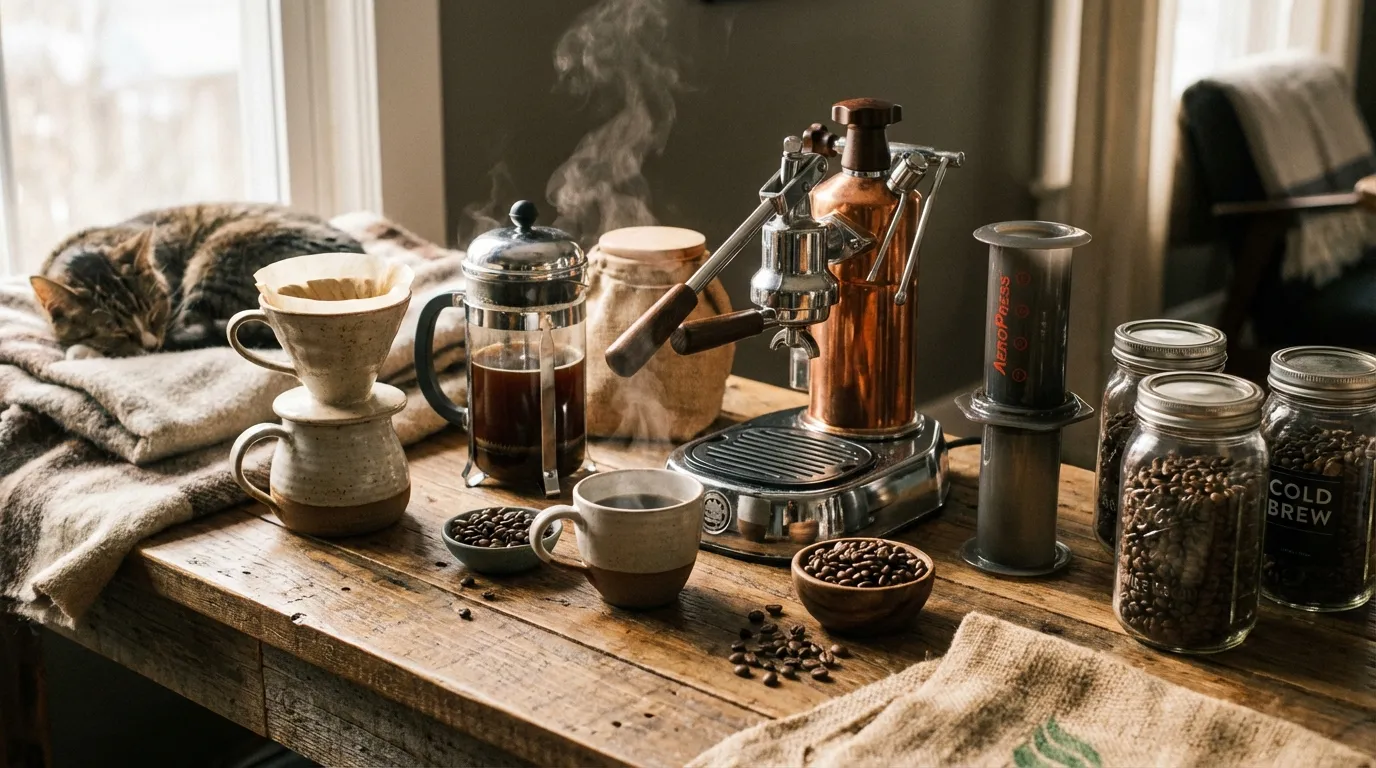
Choosing coffee beans can be confusing. Walk into a shop and you’re met with rows of bags, all staring back at you, each covered in roast levels and tasting notes across the front (sometimes way too many, honestly). With so many choices, it’s easy to freeze. Then you get home, brew a cup, and it still doesn’t taste how you expected. That happens to plenty of home brewers, probably more than people like to admit. The problem usually isn’t just the beans. Coffee beans don’t act the same with every brewing method, and the way you brew often decides which flavors come through in the cup. That’s why it often helps to match the beans to how you make coffee, not only to what sounds good on the bag.
This guide is here to make things easier. Instead of guessing, you’ll look at how different brewing methods work and which coffee beans usually fit each one (something many people miss). The approach stays simple and useful. You’ll see how roast level and processing style shape flavor, and why bean density can matter when it comes to extraction. We also talk about real home brewing habits and share tips you can use right away. Whether you use a drip machine, pour over cone, AeroPress, or cold brew in the fridge, this article is meant to help you choose beans with more confidence and end up with fewer disappointing cups.
Why Brewing Method Changes How Coffee Beans Taste
Each brewing method pulls flavor from coffee beans in its own way, and you usually notice it right away in the cup. Some methods use pressure, with espresso being the clearest example. Others depend on longer steep times, where gravity moves water through paper filters at a slower, steady pace. The difference can be bigger than many people expect. Acidity, sweetness, body, and bitterness all shift in clear ways. The same beans can taste bright and clean with one method, then seem dull with another. In some cases, they can even taste harsh, which is rarely what anyone wants.
Home brewing is very popular now. Most coffee drinkers make coffee at home every day, and you might be one of them. Drip machines are usually the most common choice, while espresso drinks and cold brew are still widely used. These routines are simple, but knowing which beans work best with each method helps reduce wasted coffee, I think. That means fewer small annoyances over time.
| Brewing Method | Home Usage Share | Style of Extraction |
|---|---|---|
| Drip Coffee | 45% | Filtered gravity brew |
| Espresso | 32% | Pressure extraction |
| Cold Brew | 24% | Long immersion |
| Single-Serve Pods | 28% | Pressurized drip |
Brewing science matters too. Water temperature, grind size, and brew time all shape extraction, and there’s no easy way around that. Faster brews often push acidity and aroma forward. Longer brews tend to calm sharper notes and bring out more sweetness, which explains why some beans feel more natural with certain methods.
Pour Over Coffee Beans: Clean and Clear
Pour over brewers like the Hario V60 and Chemex are popular because of how clear the coffee tastes, that clean, easy-to-follow flavor people often mention. One thing many notice right away is how light the cup feels. Paper filters and a short brew time, often under three minutes, help keep flavors crisp instead of heavy. This brewing style tends to bring out gentle aromas and specific notes rather than blending everything together. Because of that, lighter coffee beans usually work especially well here, especially if you enjoy picking out small details in the cup.
Light roast or light to medium roast beans are a solid starting point, and going too dark usually doesn’t help. Washed coffees, also known as wet-processed, often fit pour over best. These coffees are often grown at higher elevations and usually have brighter acidity with clear fruit or floral notes that are easy to recognize. Washed coffees from Ethiopia and Kenya are especially popular for pour over because their flavors stay clean, focused, and easy to understand.
Pour over brewing isn’t very forgiving, which many people notice pretty quickly. Dark roasts can taste bitter or smoky since paper filters remove oils and leave rough flavors more noticeable. Fresh beans also matter a lot. Once coffee goes stale, aroma fades fast, and aroma has a big impact on how pour over tastes.
If your cup tastes sour, a slightly finer grind or a bit more developed bean can help. If bitterness shows up, try a coarser grind or slightly cooler water. These are small tweaks, but they usually make a clear difference.
Espresso Beans: Balance with Body and Sweetness
Espresso is intense on purpose. Pressure forces water through coffee very fast, often in under 30 seconds, which feels a bit wild when you stop and think about it. Since everything moves so quickly, the beans need enough strength and structure to keep the shot from tasting sharp or thin. There’s not much room for mistakes. That’s why medium to dark roasts are often the safer pick, especially when you’re still dialing things in.
These roasts are usually more soluble, so flavors break down more easily under pressure. You’ll often get a heavier body and deeper sweetness, with acidity kept under control most of the time. The aim is rich, not sour. Many espresso blends rely on beans from Brazil or Central America because they often bring chocolate and nut flavors that work well here. Single-origin espresso is popular too, but it tends to do best at a medium roast. In everyday brewing, balance usually matters more than where the beans come from.
So where do issues show up? Often when beans are very light and nothing else changes. Light roasts can work, but they need very fine grinding and close, hands-on control. For beginners, medium roasts usually lead to less frustration and fewer wasted shots, which makes the process more enjoyable.
Milk changes the picture. If milk drinks are the goal, darker roasts usually hold up better, keeping bold coffee flavors from fading into the background.
French Press and Immersion Brewing: Full and Rich
French press brewing is all about full immersion, and that’s often why people enjoy it so much. The coffee grounds sit in hot water for about four to five minutes, and that slower pace is usually the whole point. With no paper filter involved, the coffee’s natural oils stay in the cup. This creates a heavier body and a rich, coating mouthfeel that’s easy to notice. It often feels thick and satisfying, especially when the beans bring some natural sweetness with them.
Medium roast beans are usually a safe and tasty choice, at least in my view. Natural or honey-processed coffees also tend to work really well with immersion brewing, and they often catch people off guard. Since these beans keep more sugars during drying, fruit notes and sweetness come through more clearly. That sweetness helps balance the fuller texture in a way that feels steady and comforting.
Very dark roasts can be tricky unless bold and smoky is what you’re after. Without a paper filter, bitterness shows up faster and sticks around. Grind size matters a lot. Too fine creates sludge and extra bitterness; too coarse, and the cup can feel thin and disappointing.
Using boiling water or skipping the skim step are common mistakes. Water around 195 to 205 degrees Fahrenheit works better. Skimming the foam after pouring can reduce bitterness and clean things up. It’s a small step, but most people notice the difference right away.
Cold Brew Coffee Beans: Smooth and Low Acid
Cold brew often feels different from other brewing methods, mostly because of how it’s made. It uses cold water and a long soak, usually 12 to 24 hours (yeah, it takes a while). That slow pace is part of the appeal. Moving gently helps pull out fewer harsh acids and more of the beans’ natural sugars. The result is a smooth, mellow cup that many people find easier to enjoy, especially if hot coffee causes discomfort, which is pretty common. There’s no rush with cold brew, and you can usually taste that calm approach in the final cup.
Medium to dark roast beans tend to work especially well for cold brew, in my view. Natural processed beans are popular because they often add sweetness and light fruity notes without sharp edges. Cold brew can soften small flaws too, so it’s a handy way to use more affordable beans and still get a balanced, pleasant cup most days.
| Cold Brew Variable | Typical Range | Effect on Flavor |
|---|---|---|
| Steep Time | 12, 24 hours | Longer equals stronger and sweeter |
| Grind Size | Coarse | Reduces bitterness |
| Roast Level | Medium, Dark | Adds body and chocolate notes |
Cold brew concentrate is usually mixed with water or milk. A simple way to start is brewing it strong, then adjusting from there. Since cold brew is pretty forgiving, trying things at home stays low-stress, like using a medium-dark natural bean with milk over ice.
AeroPress and Hybrid Methods: Flexible and Fun
The AeroPress sits in the middle between espresso and pour over. It uses immersion with a bit of pressure, though much less than a true espresso machine, and that mix is what draws people in. It’s easy to use, flexible, and works well with many beans. Medium roasts often taste great here, especially ones with balanced flavors that are forgiving and usually easy to dial in.
What keeps it fun is the range of options. You can brew fast or slow things down for more extraction, trying both is part of the appeal. Filter choice matters too: paper filters tend to give a cleaner cup, while metal filters add more body, depending on the recipe and your mood. That freedom encourages experimenting. Washed beans usually taste cleaner, while natural beans often come across sweeter. There aren’t many strict rules.
A common mistake is following recipes without adjusting for the beans. Flavors can shift quickly. If a cup tastes flat, a longer steep can help. If it’s too sharp, cooler water often smooths it out. Small changes really do matter.
Putting It All Together at Home
The interesting part is that matching beans to brew methods at home usually turns out easier than expected. Instead of chasing expert rules, start with the brew you already enjoy and pick beans that fit it. For pour over, light, washed coffees often show clear flavors and bright acidity. Espresso tends to work well with balanced medium roasts, especially if sweetness matters more than sharp edges in your cup. Immersion methods like French press usually lean toward sweet, natural beans, while cold brew often works better with smoother, darker options that keep bitterness in check.
You’ll find that buying smaller bags helps with freshness, and keeping notes, even messy ones, often shows patterns over time. Rather than trusting labels, let taste guide the process, and that’s usually how real confidence grows for home brewers.
For deeper guides on brewing, gear, and bean education, this is covered over at https://coffeemindset.com/.
Your Next Better Cup Starts Now
Great coffee isn’t about strict rules; it’s often about fit. That fit usually shows up when beans and brewing methods work well together in a practical way. When they do, flavors tend to open slowly and clearly. Cups often taste sweeter and cleaner, with a fuller feel, and the process usually becomes more enjoyable, with less coffee wasted along the way.
One approach is starting small. Try new beans with your usual brew, or keep beans you love and switch the brew instead. Don’t rush; coffee is meant to be tried at an easy pace, for example, keep the beans and swap the brew.